
The client
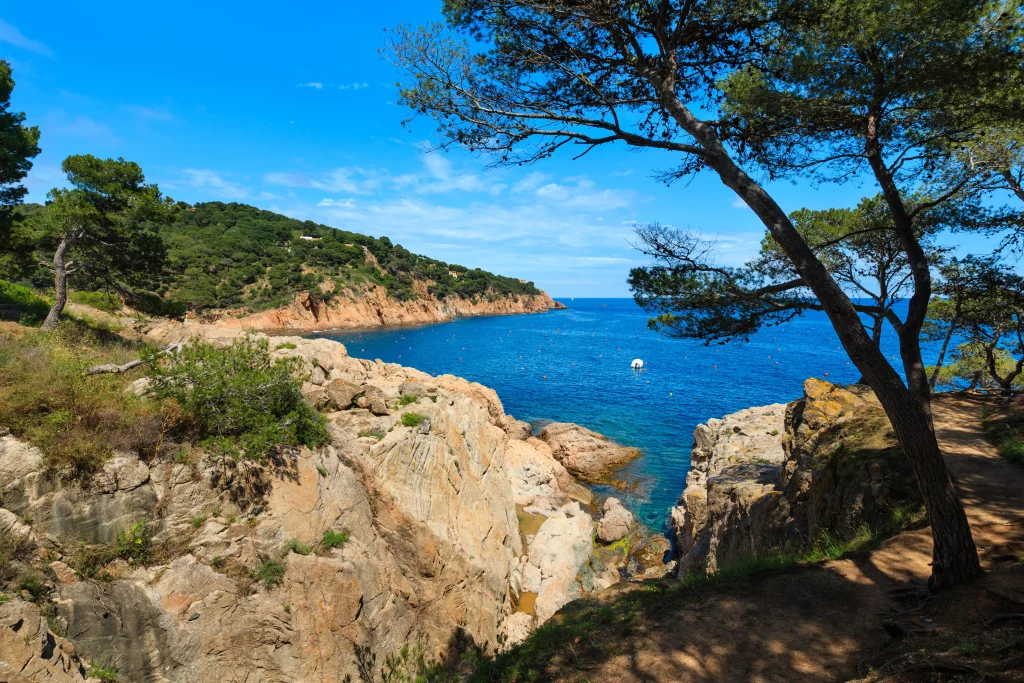
Our client is one of the most award-winning campings in Europe. It is located in the Els Aiguamolls de l’Emporda nature reserve, with direct access to a private fine-sand beach, in Castello d’Empuries (Girona), on the Costa Brava.
It has been a holiday destination for families across Europe for over 50 years and in 2023 was recognised as the Best Camping in Europe by prestigious German travel guides.
With over 30 services and facilities “Mediterranean restaurant, beach club, glamping areas, fully equipped bungalows, its own mobile app and service in six languages”, this camping is a high-value tourism business with a loyal, discerning international clientele.
In addition to their main website, they had their booking engine on a different URL.
Two domains. One company. And that is where the measurement problem began.
The challenge
When the team looked at their Google Analytics reports, the numbers appeared normal. Organic traffic. Sessions. Bounce rate. Everything seemed in order.
The problem was what was not showing up: bookings.
Every time a user clicked “Book now” on the main website and landed on the booking URL, Google Analytics recorded that session as a new, direct visit with no known source. The user’s complete history “which channel they came from, which pages they had visited, which campaign had brought them“ disappeared at the most valuable moment of the journey.
The symptoms we detected in the initial audit:
- Artificially inflated direct traffic: an abnormally high proportion of sessions with no known source, resulting from session breakage between domains.
- Incorrect campaign attribution: Google Ads and Meta campaigns that generated bookings did not receive the corresponding credit, completely distorting the ROI calculation.
- Inability to measure the real funnel: without visibility of the transition from the main website to the booking URL, there was no way to know at which point in the booking process drop-offs were occurring.
- Decisions based on assumptions: the marketing team made investment decisions based on intuition because the data was not reliable.
How we did it
The project consisted of building a measurement architecture that treated the main website and the booking URL as a single unified analytical property, without losing track of the user at any point of the journey.
- MEASUREMENT AUDIT
The starting point was a complete diagnosis of the measurement state: what data was arriving correctly, what was being lost in the cross-domain jump, what contaminations existed in the current reports, and what impact this had on the team’s decisions.
- MEASUREMENT ARCHITECTURE DESIGN
We defined the complete tagging plan: all the events we needed to measure throughout the journey, from the initial visit to booking confirmation, including accommodation selection, availability check, and the start of the checkout process.
- GA4 SETUP WITH CROSS-DOMAIN TRACKING
We configured the Google Analytics 4 property to recognise the main website and the booking URL as a single analytical domain. This eliminates session breakage and allows maintaining the linker between domains, preserving the user’s source of origin throughout the entire process.
- EVENT IMPLEMENTATION WITH GOOGLE TAG MANAGER
Using GTM as the tag management layer, we deployed all necessary conversion events and micro-conversions: visit to the availability page, accommodation type selection, booking initiation, passage through each checkout stage, and final booking confirmation.
- VALIDATION AND QUALITY CONTROL
Before activating the new configuration in production, we validated each measurement point with real-time debugging tools, ensuring the collected data was accurate, complete, and free of duplicates.
- INTERNAL TEAM TRAINING
The camping’s marketing team received specific training to correctly interpret the new GA4 reports, understand the attribution logic, and make decisions based on real business data.
Results
After implementation, the campsite went from fragmented, incomplete measurement to full visibility over its digital conversion funnel.
For the first time, the team was able to:
- Know with certainty which channel generates each direct booking (organic, paid search, email, social media, genuine direct).
- Identify which pages have the greatest impact on the booking decision and optimise them.
- Calculate the real cost per acquisition of each channel and reallocate the budget with criteria.
- Detect the friction and drop-off points in the booking process that were previously invisible.
- Make investment decisions based on real data, not assumptions.
The direct-traffic rate normalised to levels consistent with the business. Paid campaigns started receiving the correct attribution. And the team gained something of incalculable value in marketing: confidence in their own data.
Paid Media work, now measurable
- 618 conversions in Google Ads at a CPA of €5.09, an exceptional figure for the camping and tourism sector.
- 3.54% CTR in Google Ads and 4.17% in Meta Ads, both above the sector average.
- The star campaign, the PMax “Germany Sales”, achieved 464 conversions with a 7.5% CTR, confirming with data the weight of the German market.
- €3,683 in ad spend managed efficiently across Google Ads and Meta Ads, with CPCs of €0.19 and €0.13 respectively.
For the first time we trust our data. We know which campaign brings each booking and what it really costs us. We stopped deciding on gut feeling and started deciding on what the numbers say.