
TL;DR · executive summary
What you’ll find in this article
Digital marketing has accelerated to the point where what worked yesterday is slowing your growth today. Online advertising trends 2025 are not an option to be explored when there is time. They are urgent decisions that separate brands that scale from those that stagnate....
Digital marketing has accelerated to the point where what worked yesterday is slowing your growth today. Online advertising trends 2025 are not an option to be explored when there is time. They are urgent decisions that separate brands that scale from those that stagnate.
Según WordStream (2025), las empresas obtienen una media de 2 dólares por cada dólar invertido en Google Ads, con una tasa de conversión media del 4,4% en campañas de búsqueda. — Fuente: WordStream Benchmarks, 2025
At CRONUTS.DIGITAL, we do not analyze for sport. We detect what makes the difference and integrate it into strategies with real return. This is what’s coming (and what you should already be applying).
This is not a prediction. It is a warning.
AI: the backbone of marketing that converts
AI is no longer a promise. Today, those who do not integrate it are already below their competition.
Creativity that adapts in real time
With generative AI, each ad can be different for each user. We are talking about real personalization: texts, images, videos tailored to the behavior of your audience. This is not the future. It is present applied by brands that are quietly gaining market share.
Want to sell more? Start by stopping talking to everyone the same way. AI already allows you to tailor your message to the intent, timing and channel, without overloading your team. And the results are noticeable at the checkout.
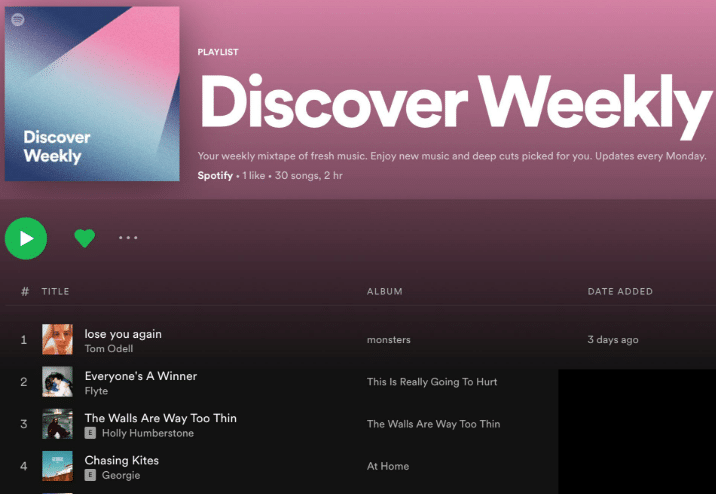
Spotify does it very well: it doesn’t wait for the user to tell it what they want. It detects it. It predicts it. And it delivers it every week, as if it were magic. But it isn’t. It’s a brutally fine-tuned system of personalization based on real data, active consumption and contextual behavior. Its “Discover Weekly” isn’t just a playlist. It’s a lesson in predictive segmentation applied at scale.
Every Monday, millions of users receive a unique playlist, built based on algorithms that analyze what you listened to, when you listened to it, how you combined it, and what users similar to you did. The result? Hyper-relevant recommendations that improve with each interaction.
Automation that doesn’t delegate, it scales
Campaign optimization is no longer manual. Platforms like Google and Meta adjust budget, creative and targeting in real time. If your team is still making adjustments by hand, they are wasting resources. The role has changed: less operation, more strategy.
Intelligent automation also means you can scale without duplicating effort. It’s the difference between a system that works for you or one that depends on you not to go under.

Predictive segmentation: sell before the customer decides
Machine learning helps identify behaviors before they occur. In B2B, this means detecting buying decisions before the buyer even declares it. Brands that apply it will have a brutal advantage.
Think of it this way: while your competitors are still waiting for the lead to “raise its hand,” you already know who is ready to convert. And you act first.
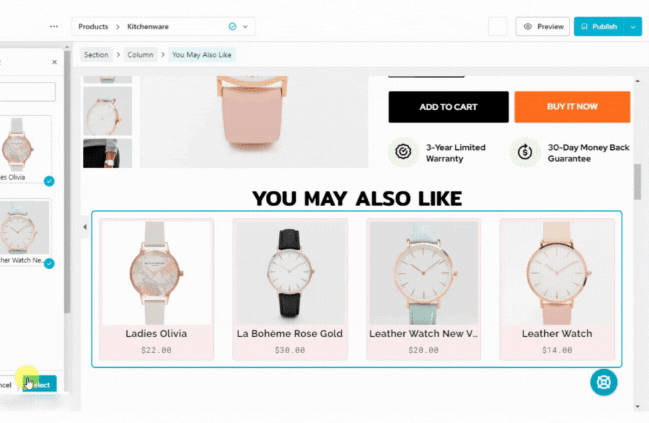
Many e-commerce still wait for the customer to “explore” to offer something else. Wrong. Brands that apply predictive segmentation don’t wait: they anticipate.
This example shows it clearly: while the user is browsing a product, the system is already generating personalized recommendations (“You may also like”) based on their history, behavior and purchase patterns of similar users. These are not random products. They are purposeful predictions.
Connected TV: your new first screen
We continue with the trends in online advertising in 2025: connected TV and streaming are already the natural habitat of the user. And brands that are not there, simply do not exist.
Programmatic advertising on large screens
Smart TVs can segment audiences with a precision that traditional television never dreamed of. Each viewer receives distinct, measurable and actionable ads — exactly what paid ads deliver on the big screen. This is not diffuse branding. It is pure performance in audiovisual format.
This opens up a huge opportunity for brands looking to get into the mind of the decision maker without looking like a generic spot. If you’re in their living room, you’re in their mind – and with a tailored message!
McDonald’s got it right with its Raise your Arches .
He didn’t need to show burgers or menus. He played with a gesture (raised eyebrows like golden arches) to trigger the pre-order excitement at McDonald’s.
What was powerful was not only the creative, but how they connected it with real-time data. They used programmatic advertising on Smart TVs and social platforms to adapt ads according to context:
- Hot day: soft drinks, McFlurry, iced coffee.
- Rainy day: warm, comforting meals.
The system used geolocation and local weather data to decide which ad each user would see. Result: immediate relevance.
Metrics that matter
We no longer talk about “estimated impacts”. Now we measure what was seen, how long, what action it generated. Connected TV ceases to be a visibility expense and becomes a real conversion channel.
You can find out if someone saw your ad, at what point they stopped seeing it, if they scanned a QR code or visited your website. In other words: from “potential impact” to “actual return”.
Advertising formats that you can no longer ignore
You have no more excuses. If you’re not creating advertising with these new formats, you’re losing revenue and letting your competition take the lead.
AR and VR: experiences that sell
Augmented reality (AR) and virtual reality (VR) are set to be online advertising trends in 2025. From virtual fitting rooms in e-commerce to interactive simulations in sectors such as automotive or real estate, consumers can now live immersive experiences even before they buy.
Brands that adopt this type of format generate greater recall and also build stronger ties with their customers by offering them differentiating experiences.
Burger King understood: it’s not enough to make your logo bigger, you have to get inside the user’s head with experiences they won’t forget. Their “Burn that ad” campaign was a direct attack on the competition using augmented reality.
The mechanics were brutally simple and effective: you scanned a poster of another brand with the Burger King app, the rival ad burned on your screen and, when the flames consumed it, a coupon for a free Whopper appeared. It wasn’t just gamification, it was conversion with spectacle included.
The message was clear: don’t buy the competition, destroy it and win. Each user became an accomplice of the brand, living an experience that mixes entertainment with tangible rewards.
Shoppable Ads: eliminate steps, trigger sales
Every click counts.
Ads where you can buy without leaving the platform reduce friction and increase conversion. In 2025, not having this option is like being out of the game.
Instagram, TikTok, YouTube… All the big players are competing to integrate direct e-commerce. If your brand isn’t there, you’re losing ground.
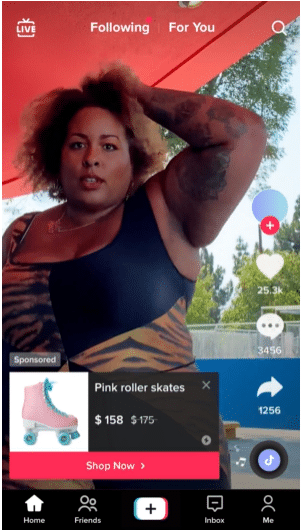
Shoppable ads on TikTok turn the platform into a showcase that sells in real time. They are points of purchase integrated directly into the content that the user is already consuming.
In the example of the image, while watching a video in your feed, a featured product appears (in this case, pink skates) with price, discount and immediate purchase button(Shop Now). All without leaving TikTok.
According to the 2025 Outlook Study by the Interactive Advertising Bureau (IAB), 38% of advertisers in the U.S. have already decided that shoppable advertising is a priority. It’s not a fad, it’s a real investment focus. And while many are waiting for Retail Media Networks (RMNs) to push them to try it, some brands are already seeing tangible results.
In November 2024, some media buyers allocated up to 10% of their monthly budget to shoppable ads. The result? Duracell shot up 86% “add to cart” rates thanks to ads on Amazon’s Prime Video.
Audio Ads: attention without distractions
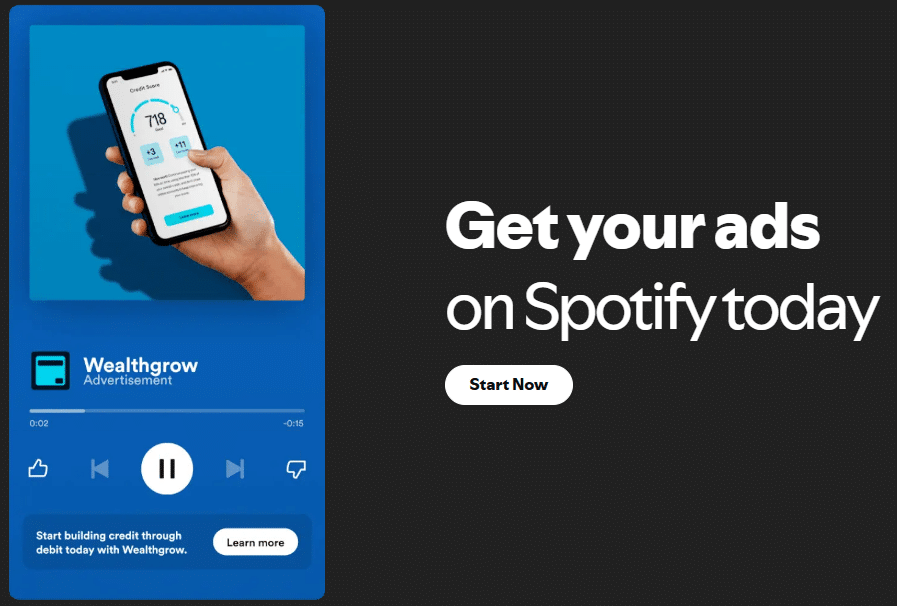
While your customer is driving, training or cooking, audio is the open channel. Podcast and music ads have high retention and serve to target with surgical precision.
It is one of the few spaces where the user is not distracted by a screen. Taking advantage of it with good storytelling and clear CTAs is key for brands looking for impact without noise.
Un análisis de 360om Agency (2025) muestra que el CPC medio en Google Ads es de 5,26 dólares, con incrementos interanuales del 8-12% en la mayoría de industrias. — Fuente: 360om Agency, Google Ads Benchmarks, 2025
Data as a competitive advantage (or as a chronic weakness)
Data is the real currency of digital marketing. We’re not talking about pretty dashboards or inflated metrics: we’re talking about information that decides whether your business goes up or down.
The end of third-party cookies is real
And no, it’s not a catastrophe. It is the best excuse to stop relying on borrowed data and build direct relationships. First-party data is no longer an option and becomes a condition to compete.
You need proprietary systems for capturing data: forms, connected CRMs, integrations with automations. And you need all that to translate into real insights, not pretty dashboards.
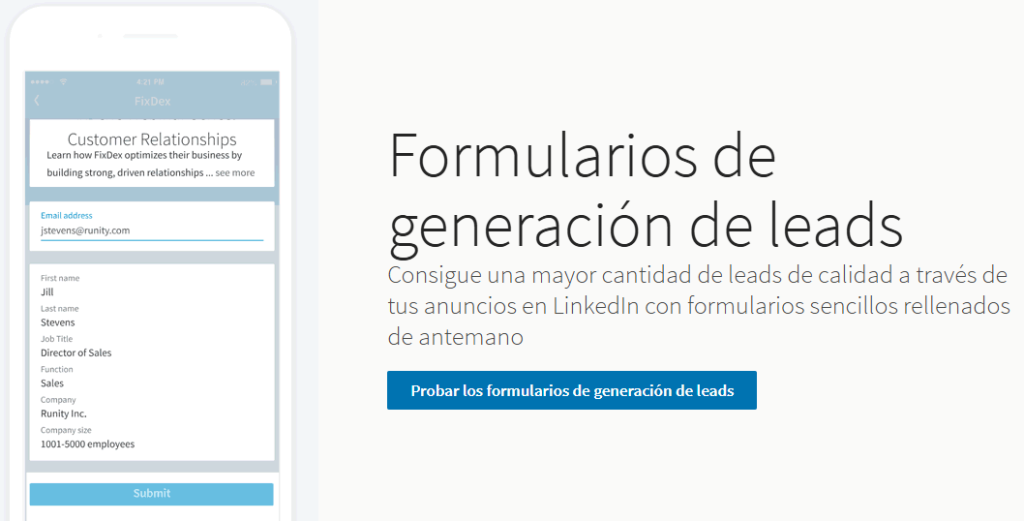
In Linkedin, instead of sending the user to an external landing page, the ad includes a native form within the platform itself. With one click, the lead shares their basic information (name, email, company, position) because it is already registered in their profile.
Why does it matter? Because you don’t rely on third-party cookies, the process is much faster, frictionless and you get quality data (LinkedIn validates the information because it comes from active profiles, not opaque tracking).
Transparency as a differential
The user no longer accepts opaque conditions. It demands to know what you do with its data. And brands that are clear will gain trust (and sales).
Trust is built with visible actions: clear consent pop-ups, understandable policies, and above all, respect for the user’s decision. That is not a “plus” today: it is a barrier to entry.
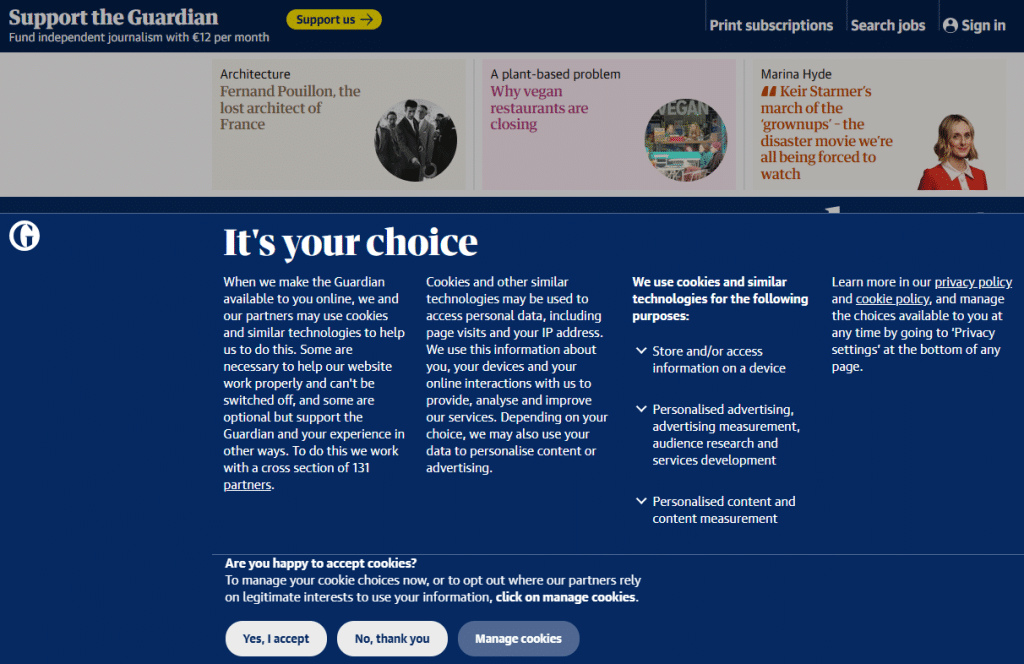
The Guardian gets it right: it hides nothing and puts the user in control. It explains which cookies are necessary and which are optional, details what the data is used for and offers three clear paths: accept, reject or manage. No small print or pushing “yes” out of fatigue. It’s simple: when you give real and transparent choices, you turn a legal process into trust that pays for itself.
Frequently Asked Questions
What CMOs and directors ask us.
8 concrete questions answered in ≤ 80 words · optimal format for AI Overviews.
What remarketing strategies will work best in 2025 for e-commerce?
What targeting mistakes are holding back the growth of B2B brands in digital advertising?
What consumer trends will force a redesign of social media advertising formats?
What new metrics should brands adopt to measure the real success of their digital advertising?
How will CRM data be integrated with online advertising in the coming years?
CRM will cease to be a dead archive and become a real-time advertising activation engine. Instead of collecting leads for later analysis, behavioral data, purchase history and dynamic segmentation will be directly connected to platforms such as Google Ads, Meta or LinkedIn. Thus, audiences will be automatically updated and messages will be hyper-relevant. Example: if a customer has not purchased for months, the platform receives the signal and launches a reactivation campaign in real time. CRM will be the heart of personalization at scale.
![How to Delete a Google Review: Step-by-Step Guide [2026]](https://cronuts.digital/wp-content/uploads/2026/07/portada-71008-1-768x403.webp)