
TL;DR · executive summary
What you’ll find in this article
If you change your strategy every month, you have no strategy. You have fear. And fear doesn’t scale. Strategic consistency in marketing is not an option, it’s a brutal necessity. Because in a digital ecosystem saturated with ephemeral trends, only those who sustain a clear direction get results that don’t disappear with the next algorithm....
If you change your strategy every month, you have no strategy. You have fear. And fear doesn’t scale. Strategic consistency in marketing is not an option, it’s a brutal necessity. Because in a digital ecosystem saturated with ephemeral trends, only those who sustain a clear direction get results that don’t disappear with the next algorithm.
Según Statista (2025), el mercado global de marketing digital alcanzará los 786.200 millones de dólares en 2026, con un crecimiento interanual del 10,1%. — Fuente: Statista, Digital Marketing Report, 2025
Your competition is not beating you by creativity. They are beating you because they don’t move with intuition: they move with a system. And if you don’t have one, you are paying the price in lost opportunities, sales that don’t come and teams that only react, but don’t build. To have strategic consistency in marketing is to have a plan that lasts, adapts and scales.
That’s precisely what we do at CRONUTS.DIGITAL: to plan, execute and measure digital strategies that really scale. Without beating around the bush.
Reality check
Many companies think they are executing a strategy, when in reality they are surviving in chaos. Your recruitment doesn’t scale because you don’t have a system in place. Your funnels change every month because there is no plan that sets the direction. Your KPIs fluctuate because they are not tied to real business objectives. And your decisions are influenced by fads, not data.
This is not strategy. It is a collection of reactive actions . And every unfocused action adds cost, not growth. The consequence is not only the loss of sales, but the total misalignment of your team and your resources.
Diagnosis: the real enemy
The enemy is not the competition. It’s not the algorithm. It’s the strategic fickleness that turns your marketing into Russian roulette. If you change your message before your audience understands it, you are not testing: you are sabotaging your positioning. If you abandon a channel before you understand its cycle, you are not iterating: you are wasting budget.
Every premature move erodes the trust your brand should build. Every abrupt turn throws off your potential customer. And every “new” idea that doesn’t connect to a larger strategy is another waste of time disguised as creativity.

What does “strategic consistency” mean in marketing?
Strategic consistency in marketing is not rigidity, it is sustained direction. It is the ability to sustain a coherent narrative, a functional funnel and a constant optimization system.
It means prioritizing what makes an impact and stop reacting to everything that seems “new”. It means iterating on a robust foundation, not changing it every time something doesn’t work on the first try. It means being clear that what you build today must continue to work (and improve) in the next six months.
Real success
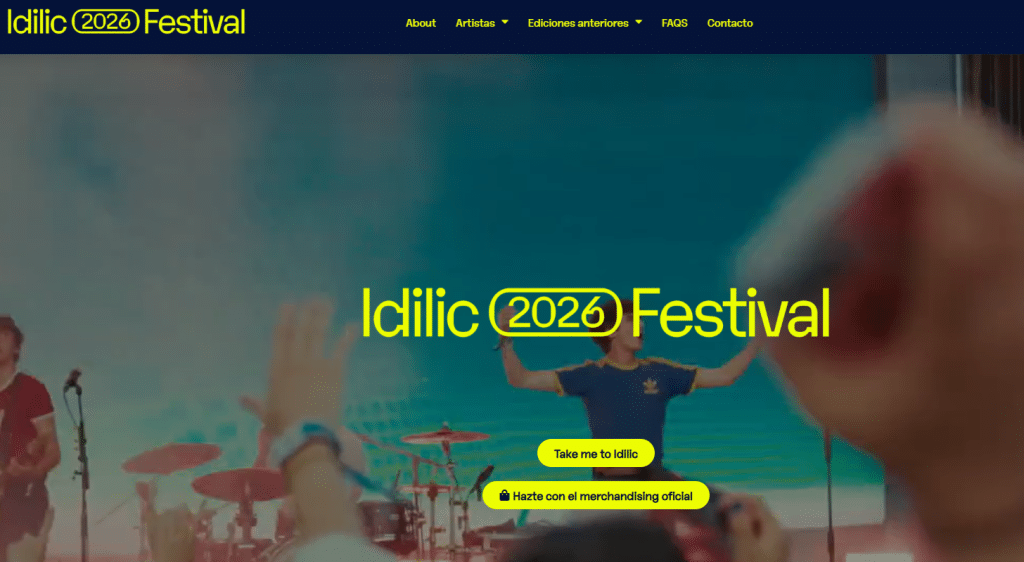
The success of the first edition of the Idilic Festival is a clear example of how strategic consistency in digital marketing can lead to outstanding results. Despite being an emerging event without the backing of previous editions, the digital strategy implemented was solid, with a long-term approach that focused both on generating immediate visibility and building a solid digital presence. The key to the strategy was consistency and continuity in all actions, such as SEO techniques to increase brand visibility from zero to over 1000 ranked keywords, or the creation of an intuitive and multilingual website that offered an engaging experience, from event information to ticket purchases.
In addition, consistency in the execution of paid advertising campaigns on Meta and Google and effective communication through email marketing were decisive factors in achieving SOLD OUT for the event two weeks before the scheduled date. It was possible to ensure that each action was aligned with sales and engagement objectives, without being dispersed in short-term tactics. By integrating ticketing platforms and maintaining hosting support that ensured excellent performance, the festival team met their expectations, and also strengthened the community around the event: visibility, sales and loyalty grew organically and sustainably.
🎯 Result: SOLD OUT two weeks before the event.
🎯 SEO Keywords: +1000 positions from scratch.
🎯 Multilingual website with fluid UX: navigation + conversion optimized.
🎯 Sustained Paid Media: Meta and Google with continuous strategy.
🎯 Email Marketing: effective communication aligned to funnel.
🧠 Key: Consistency, patience and clear direction throughout the cycle.
Signs that you do not have a record
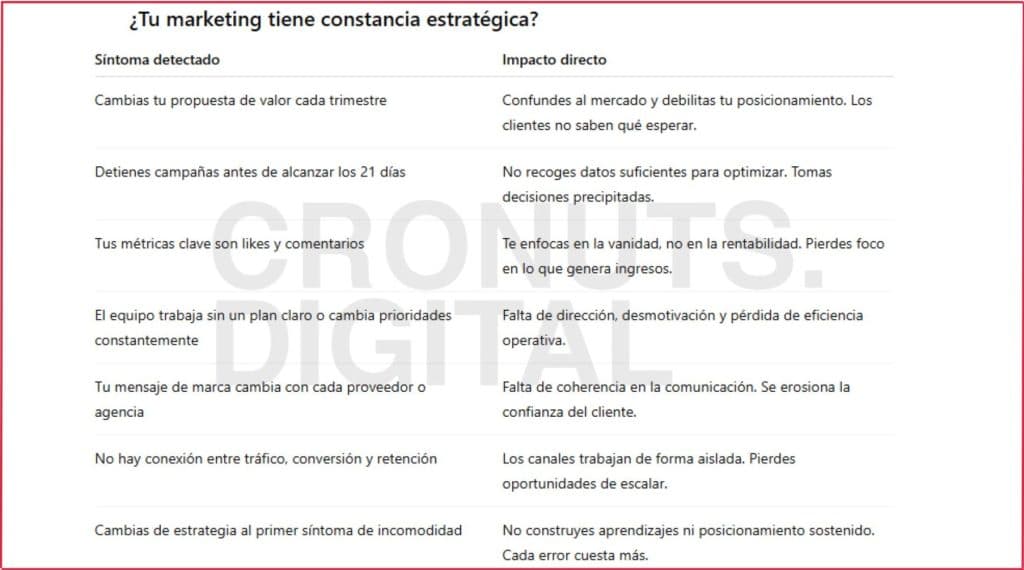
You change your value proposition every quarter
An unstable value proposition is confusing. If you can’t sustain a clear promise to your market for at least one sales cycle, you’re eroding your positioning. Every change creates friction, and that friction costs sales. Your potential customers don’t know what to expect, and a confused customer doesn’t buy.

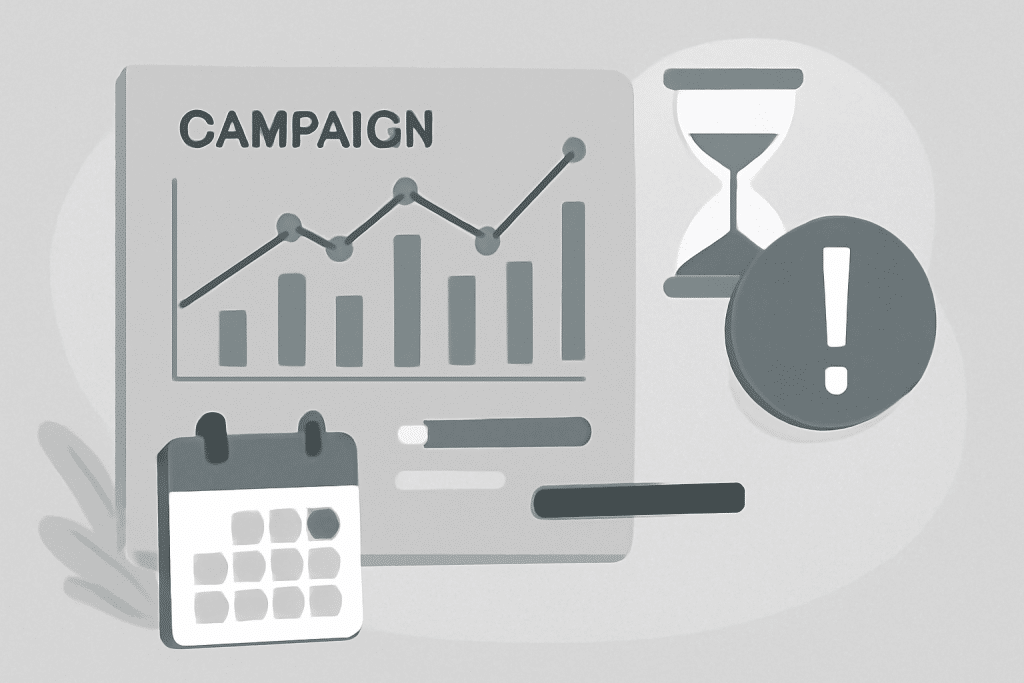
Your campaigns do not exceed three weeks
Campaigns need time to collect data, optimize and reach their efficiency point. If you pause everything before the 21st, you’re not executing marketing: you’re trying your luck. And marketing is not a casino. It’s a system of testing, measuring and continuous improvement.
You measure likes, not revenue
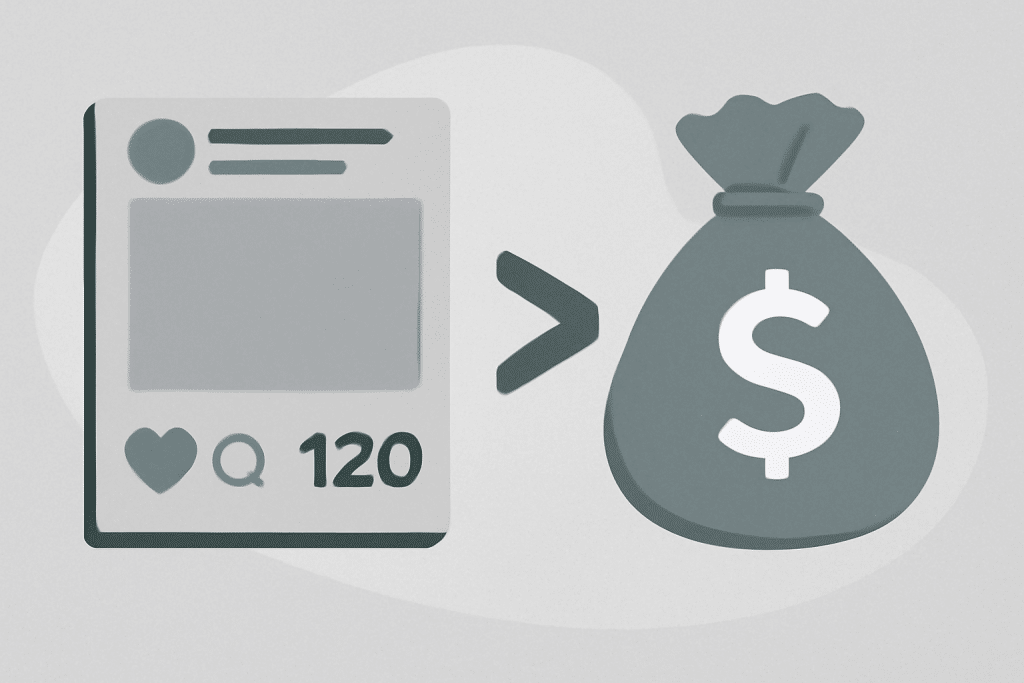
Digital ego doesn’t pay salaries. If your successes are based on superficial interactions and not cash generation, you’re playing a game that doesn’t scale. Vanity metrics entertain. Profitability metrics transform. Focusing on the superficial diverts resources from what really matters: selling more, better and with less friction.
Your equipment lives in “trial and error” mode with no direction
To test without a hypothesis is to spend without control. If every marketing action is born without a clear theory of impact, and if there are no defined mechanisms to measure success or failure, you are wasting talent. The team gets frustrated, the results don’t come, and the culture becomes reactive, not proactive.

Your brand message changes with each supplier
When the message depends on the last freelancer or the last agency that touched your assets, what you have is not a brand: it is a collage of voices without coherence. And consistency is the first step to build trust. If your storytelling changes depending on the speaker, you are losing authority before you start.

What works (and doesn’t)
There are truths that many know, but few apply. Maintaining a coherent message positions you. A well-designed funnel that is improved and measured is more effective than any hack of the week. A brutally honest reporting system allows you to correct before the damage is irreparable.
Automating with intelligence frees your team and accelerates operations. Having actionable dashboards changes the conversation from “what did we do” to “what are we going to improve”. And working on real data, not intuition, transforms meetings into decisions that impact the bottom line.
Here’s how we do it at CRONUTS.DIGITAL
We don’t improvise funnels every quarter. We build conversion architectures that are sustained, tested and improved until they burst the box.
We do not measure for ego. We measure to decide. And if something does not move the business, it is removed from the dashboard.
We don’t change the message with every sprint. We sustain it until the market understands it, believes it and buys it.
We automate what takes focus away. We report what changes decisions. We execute what generates cash.
And above all, we think in terms of a system, not in terms of individual campaigns:
- A strategy that is not saved: it is activated from day one.
- Phased plan with real priorities, not tasks to “accomplish”.
- Connected levers: traffic, conversion and retention in the same direction
- Weekly optimization, but without turning the steering wheel every time something is uncomfortable
This is strategic consistency in marketing: sustain what works, adjust what doesn’t, and scale without slowing down every two weeks to “rethink everything”.
Un estudio de Deloitte (2025) revela que las empresas con estrategias digitales integradas obtienen un 23% más de rentabilidad que las que operan con canales aislados. — Fuente: Deloitte Digital, 2025
The Inconvenient Truth
Your strategy can’t be different every month. If it is, it’s not strategy: it’s improvisation on a budget. Real growth doesn’t come from brainstorming. It comes from maintaining a direction, executing with method, measuring with coolness and adjusting with judgment.
Every click without a system behind it is a lost sale. Every week without focus is one less opportunity to scale. It’s not about doing more. It’s about sustaining what works, eliminating what doesn’t and staying the course, even when fear says otherwise.
Frequently Asked Questions
What CMOs and directors ask us.
8 concrete questions answered in ≤ 80 words · optimal format for AI Overviews.