
TL;DR · executive summary
What you’ll find in this article
A Google Ads advertising set up is the key to scaling a B2B business. But like any powerful tool, it only works if you know how to use it. What we’re going to discuss here is not a quick trick, nor an easy recipe. It’s a system that, when implemented correctly, can transform the growth of your business and lead it to really scale, not just look like it’s growing....
A Google Ads advertising set up is the key to scaling a B2B business. But like any powerful tool, it only works if you know how to use it. What we’re going to discuss here is not a quick trick, nor an easy recipe. It’s a system that, when implemented correctly, can transform the growth of your business and lead it to really scale, not just look like it’s growing.
Según WordStream (2025), las empresas obtienen una media de 2 dólares por cada dólar invertido en Google Ads, con una tasa de conversión media del 4,4% en campañas de búsqueda. — Fuente: WordStream Benchmarks, 2025
If you don’t know how to structure your account properly, target correctly or create ads that actually convert, you will be throwing your money away. The difference between a Google Ads that makes you grow and one that simply wastes your money is in the details. And those details, if left unchecked, will cause you to miss valuable opportunities.
At CRONUTS.DIGITAL, we do not come to fulfill tasks or to sugarcoat reality. We face the hard truth of what your business needs to grow. And in the world of Google Ads, that truth is that every click that doesn’t convert is a lost opportunity. If you don’t want to waste time, money and opportunities, stick with us and find out how to make a Google Ads advertising set up that is error-free, no excuses and fully optimized for B2B.
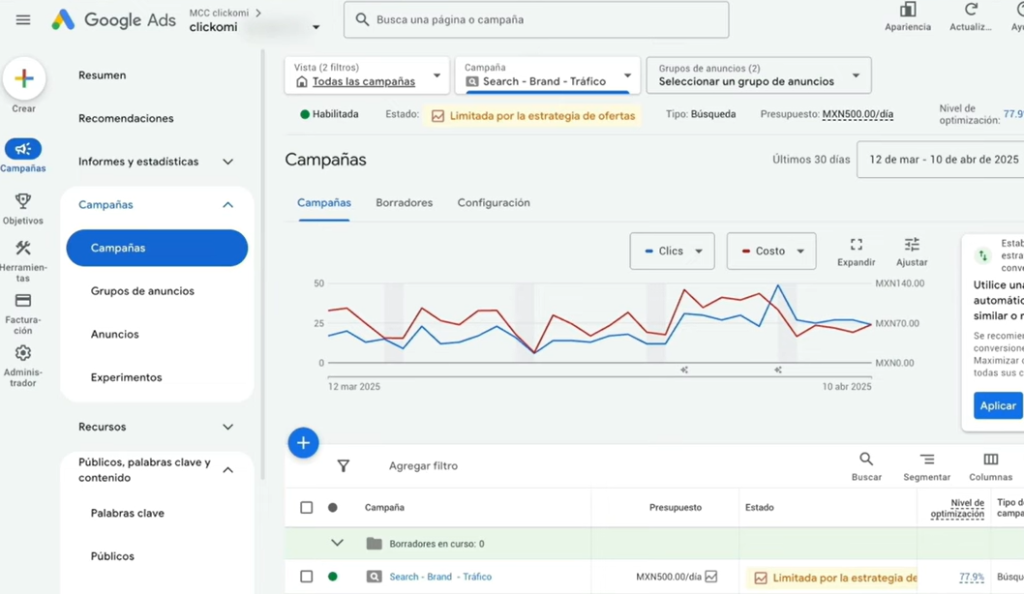
Know your audience and objectives
The first mistake most companies make when they start with Google Ads is not being clear about who they are talking to. This is not about generating traffic, but about generating relevant traffic. It’s not about impressing everyone, it’s about connecting with the decision makers who can really change the course of your business.
Define your buyer persona
The key here is to thoroughly understand your buyer persona. What industry is he or she from? What is the size of the company? Who makes buying decisions and how are those decisions made? If your buyer persona is a marketing manager at a technology company, are you sure you understand what that person is looking for when they Google “marketing automation solution”? Or are you just guessing?
A vague profile is not enough; you need something detailed. What stage of the buying process are they in? What problems are they trying to solve? It’s not about blindly launching ads; it’s about speaking directly to that person who is looking for what you’re offering.
Set clear objectives
You have to know exactly what you want to achieve. The goals of a Google Ads campaign are not just “to get more clicks” or “to be more visible”. It’s about making decisions that generate tangible results. Are you looking for qualified leads? Or just to increase your brand visibility? If you’re generating traffic, but that traffic doesn’t convert, you’re losing money. Every Google Ads campaign should have a specific and measurable objective, aligned with your business KPIs.
Account structure and campaigns
The set up of your Google Ads account is as important as the strategy behind it. There is no way for a campaign to be successful if it is not well structured from the beginning. The hierarchy within Google Ads is not a whim; it’s a system that, if you don’t set it up correctly, will waste your time, money and effort. And if you don’t mind losing that, then don’t read on.
The hierarchy in Google Ads
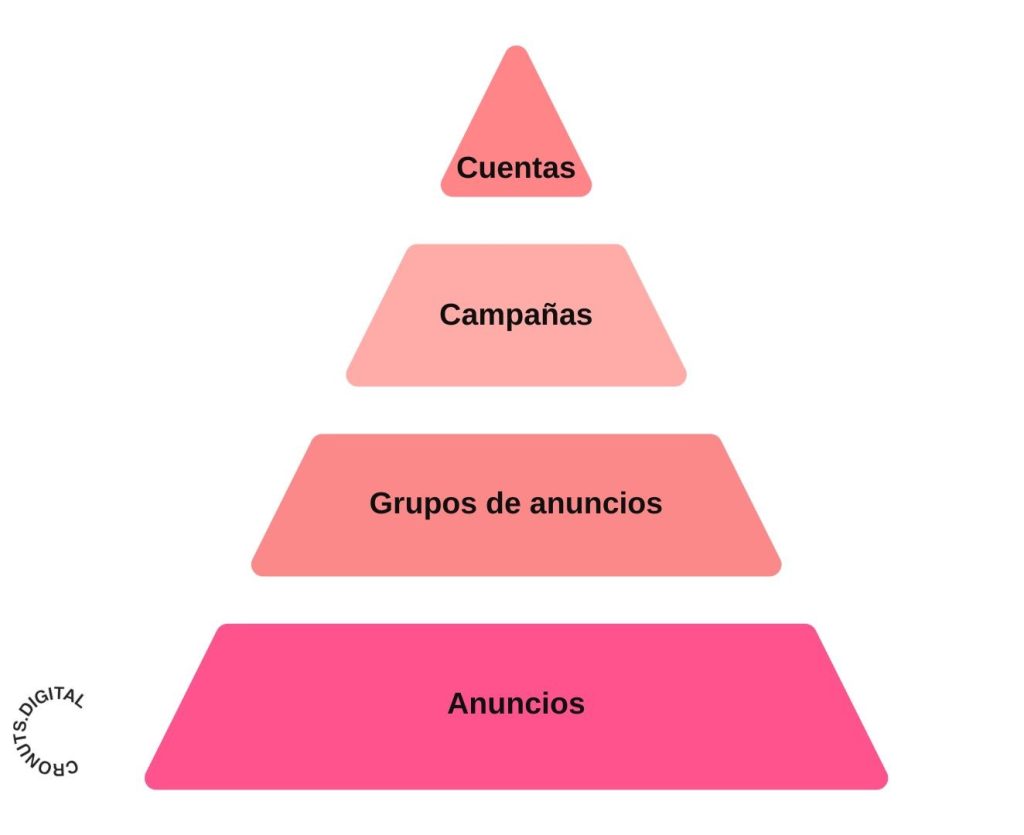
Google Ads has a clear hierarchy: Account → Campaigns → Ad Groups → Ads. This system is essential. If you don’t follow this structure, chaos will consume you. Each level must be set up precisely, and there is no room for error.
Within each campaign, you should segment by product, service or even by funnel stage. If you sell business software, you may want to create separate campaigns for each type of customer (e.g., small, medium or large businesses) or for each type of product you offer.
Suggestions for B2B
When working in B2B, targeting by account or sector is key. If you are selling to financial services companies, make sure your campaigns are targeted specifically to that sector. Segmentation must be extremely precise.
Keyword selection
Keywordsare the backbone of your Google Ads campaigns. If you don’t choose the right ones, all the effort you put into the campaign will be wasted. The wrong keywords can cause your ad to reach the wrong people, waste your budget and cause you to miss valuable opportunities.
How to do B2B keyword research
It’s not about choosing popular keywords: it’s about understanding which keywords will attract the decision makers who are actually looking for what you offer. Tools such as Google Keyword Planner o SEMrush will help you find relevant terms, but the most important thing is to know how to use them. If you are targeting a very specific sector, long tail keywords can be your best allies.
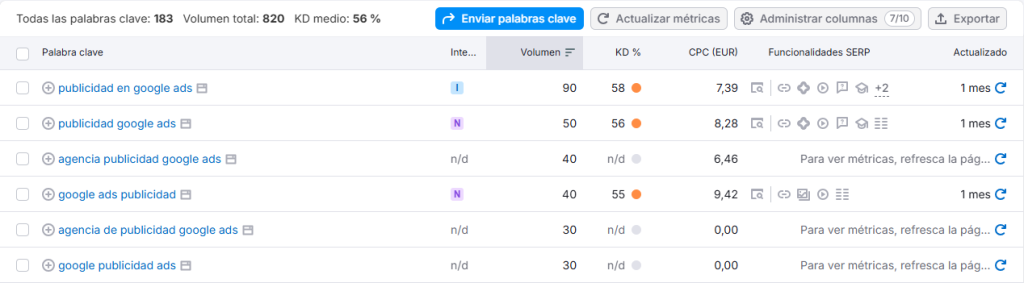
Types of concordance
Exact and phrase matches allow you to have total control over who sees your ad. If you want your ad to be shown only when exact terms related to your product are searched for, then exact match is your friend. If you prefer a slightly broader but still controlled approach,phrase matching will give you that balance.
Modified broad matches can be useful if you want to reach a wider audience, but you must be careful not to waste budget on irrelevant clicks. And of course, don’t forget negative keywords. If you don’t want your ad to show for irrelevant terms, negative keywords are essential.
Segmentation configuration
Targeting is the secret weapon of Google Ads. It’s not about reaching as many people as possible; it’s about reaching the right people. If you don’t know who to target, you’re wasting your budget.
Segmentation by location, language and device
Not all locations are relevant to your business. If your business only operates in Madrid, why spend money showing ads in Seville? And if your audience is searching on mobile, why not adjust your campaigns to show on mobile devices? Google Ads allows you to target your audience very specifically, and it is essential that you do so.
Advanced segmentation
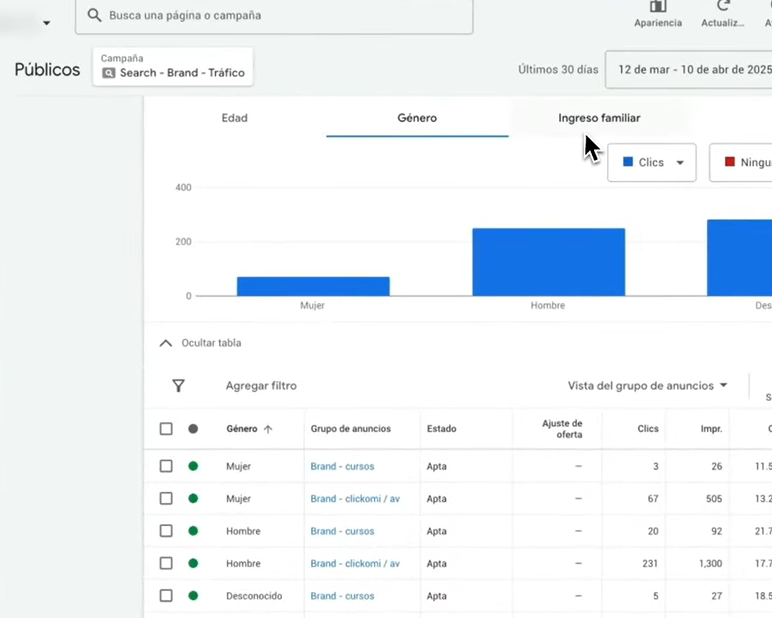
For B2B, advanced targeting is crucial. You can target specific industries, professional interests and online behaviors. If someone has previously interacted with your site or shown interest in topics related to your product, a remarketing ad can be the key to converting them into a customer.
Creation of advertisements
There is no such thing as a generic ad that works. Ads must be precisely designed to catch the attention of your buyer persona and, above all, to convert.
Effective ad structure for B2B
The title of your ad should be direct, clear and arouse curiosity. Don’t waste time beating around the bush. The description should be concise and focused on the value your product brings to the customer. And the CTA… that should be clear, strong and direct. Don’t put “learn more”; put something like “Request your demo now” or “Learn how to improve your processes”.
Ad extensions, such as contact forms or site links, should be leveraged to the fullest. In B2B, it’s not about clicks; it’s about converting those clicks into an actual action.
Conversion configuration
Measuring the success of your campaigns is not just a matter of seeing how many clicks you get. What’s important is how many of those clicks actually convert into qualified leads or customers.
How to define relevant conversions
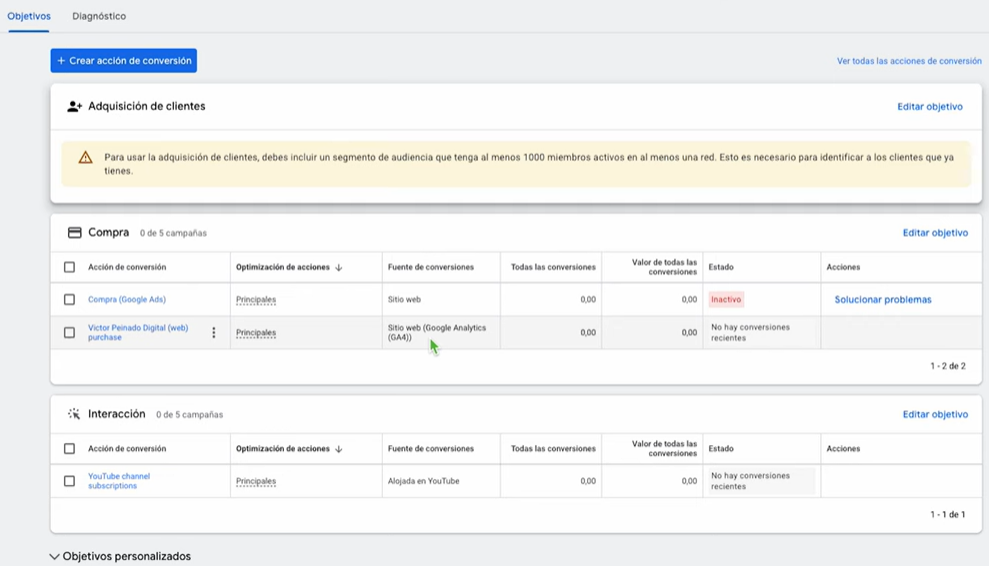
In B2B, the most relevant conversions are usually demo requests, content downloads or interactions that lead to a specific business action. Set up conversion tracking correctly to know which campaigns are working and which are not. Without this measurement, you’ll be guessing about the impact of your investment.
Budget and bids
Budget is one of the most important decisions you will make. It is the oxygen of your campaign. But, as with everything, it’s not about spending more, it’s about spending wisely.
How to allocate budget
In B2B, the budget should not be allocated equally among all campaigns. If a campaign is oriented to lead acquisition, it will need a larger budget at the beginning of the funnel. As leads qualify, you can reduce the budget on retargeting campaigns and optimize every penny invested.
Bidding strategies
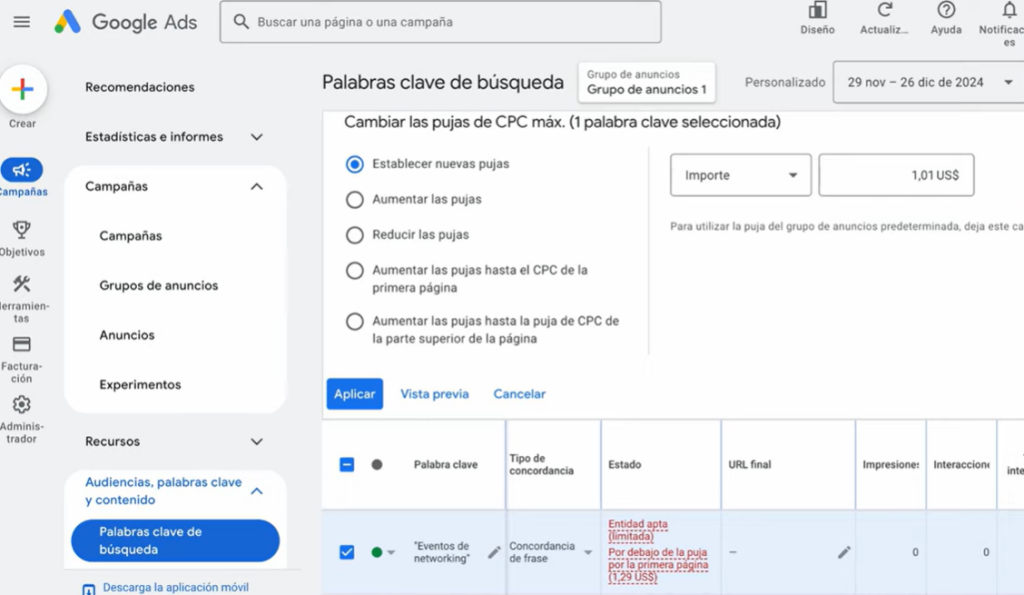
Bidding strategies should be aligned with your objective. If you are looking to maximize the number of customers at a specific cost, opt for CPA (Cost per Acquisition). If your goal is profitability, ROAS (Return on Ad Investment) is what you need. But the most important thing is to avoid falling into the trap of bidding too fast without sufficient data.
Optimization and monitoring
Don’t be fooled: setting up a Google Ads campaign is just the beginning. The real magic is in the ongoing optimization.
Monitoring and key metrics
In B2B, the most important metrics are CPL (Cost Per Lead), CTR (Click-Through Rate) and lead quality. If you are not monitoring these metrics, you risk your campaign slipping down the wrong path and your budget being diluted without realizing it.
A/B Testing
A/B testing is the key to improving your performance. Don’t just tweak an ad and expect everything to work. Run continuous tests, adjust based on the results and always keep your eye on what converts.
Un análisis de 360om Agency (2025) muestra que el CPC medio en Google Ads es de 5,26 dólares, con incrementos interanuales del 8-12% en la mayoría de industrias. — Fuente: 360om Agency, Google Ads Benchmarks, 2025
Real success: Cal Fuitós
When Cal Fruitós, a well-known supermarket chain focused on fresh and proximity products, faced a stagnation in its online sales after the pandemic boom, they knew they had to do something radical. The challenge was clear: revitalize their ecommerce channel, something that seemed almost impossible given the rate of stabilization following the health crisis.
The goal was on the table: increase ecommerce sales. But, like any business facing a real challenge, there was no time for half-baked solutions or missteps. They required a solid, coherent strategy that would not only increase sales, but also improve their brand visibility in the digital environment, all while adapting to an increasingly competitive online marketplace.
How did we do it?
Our strategy was a stroke of precision. We designed a multifaceted campaign that aligned perfectly with the brand’s philosophy.
- Content generation: we worked together with the Cal Fruitós team to create visual and written content that would improve the online presence, optimize branding and brand perception in social networks and on their website.
- Google Ads+Campaigns advertising set up: we launched specific campaigns for Google Ads, with more than 20 variations of creatives adapted to the different customer segments we had identified. Budget management was rigorous and efficient, optimizing every euro invested to maximize impact.
- SEO and blog articles: the strategy was not only limited to paid advertising. We created two monthly blog articles focused on relevant topics for the target audience, which substantially improved the organic positioning and strengthened the SEO of Cal Fruitós.
- Customer segmentation: we perform an exhaustive analysis of customer behavior, create differentiated clusters for more precise personalization and more effective retention.
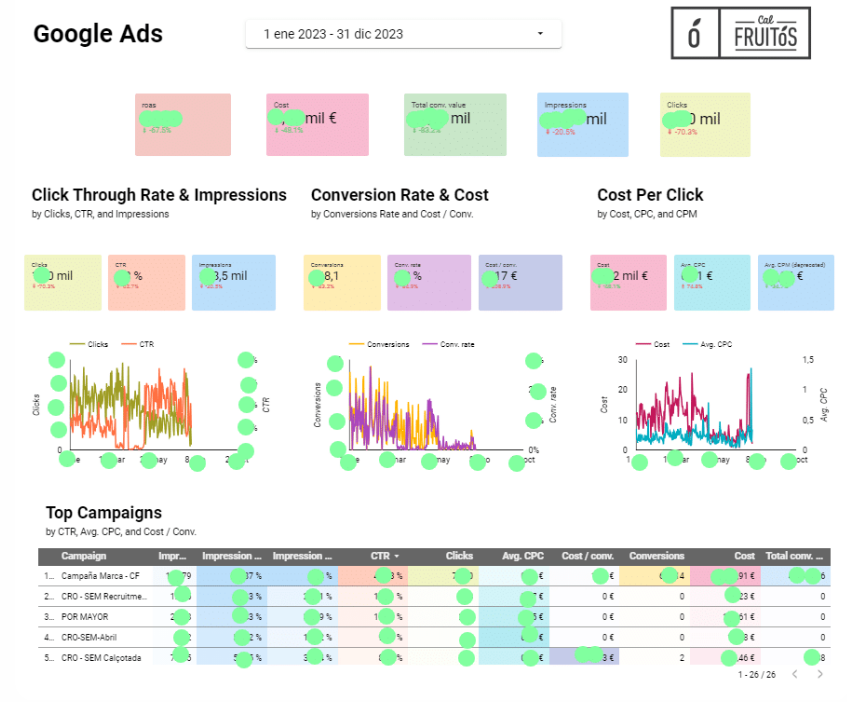
- Data visualization dashboard: we implemented a data visualization dashboard that integrated data sources from Google Ads, social media, sales and the customer database.
Results
The figures speak for themselves:
- ROAS higher than 3 in all recruitment campaigns: this means that for every euro invested, Cal Fruitós not only recovered its investment, but tripled its return. The effectiveness of the Google Ads campaigns was resounding.
- 35% average increase in organic views on social networks each month: which contributed to the brand’s visibility, and helped build a loyal digital community committed to Cal Fruitós’ values.
- Significant improvement in SEO: we went from having 11,000 keywords indexed in Google to 19,000, which showed a significant improvement in positioning and allowed Cal Fruitós to stand out more in its sector.
Frequently Asked Questions
What CMOs and directors ask us.
8 concrete questions answered in ≤ 80 words · optimal format for AI Overviews.
How much does Google Ads pay per 1000 visits?
What are the 3 pillars of Google Ads?
-
Structure: A well-organized account is key. If you don't have well-defined campaigns, ad groups and keywords, your performance will suffer.
-
Targeting: reaching the right audience is everything. Google Ads allows precise targeting: from location to search behavior. If you're not targeting your ads to the people who can actually become customers, you're losing money.
-
Optimization: the magic is not in the launch of campaigns, but in their continuous adjustment. Google Ads requires constant monitoring and optimization to improve performance, from adjusting bids to testing different ad versions. If you're not optimizing, you're not getting the most out of it.
What common mistakes should I avoid when setting up Google Ads?
-
Lack of target audience definition: if you don't know who you are targeting, your campaign will be ineffective. It is crucial that you accurately define your buyer persona and segment properly.
-
Using keywords that are too general: if you choose keywords that are too broad, you could end up attracting irrelevant traffic, which translates into clicks that don't convert. Instead, use specific, long-tail keywords that align with the search intentions of your ideal audience.
-
Not using conversion tracking: If you don't set up conversion tracking, you won't know what actions users are taking after clicking on your ads. Without this data, you won't be able to adjust your strategy to get better results.
Is it possible to target Google Ads ads by industry or sector?
How to optimize landing pages to improve Google Ads conversions?
-
The message must be clear and relevant: the page must be aligned with the ad and respond quickly to what the user is looking for. If your ad talks about "automation solutions", your landing page should reinforce that message directly.
-
Load fast: if your page takes a long time to load, users will abandon before they can convert. Optimize images, reduce the use of heavy scripts and use speed testing tools.
-
The call to action (CTA) should be clear and prominent: the CTA should be direct and stand out visually to guide the user to the action you want. Instead of "Learn more", use a CTA like "Request a free demo" or "Get your trial today".