

TL;DR · executive summary
What you’ll find in this article
What ChatGPT Ads is, how it works, CPM/CPC pricing and which countries can advertise now. A complete guide to launch your first campaign....
Updated August 20, 2026.
ChatGPT Ads is OpenAI’s native advertising system inside ChatGPT: ads that appear below the AI’s responses, managed from OpenAI Ads Manager and bought on a CPM or CPC basis. OpenAI launched it on August 11, 2026, and it is already available in more than 40 countries, including Spain. This guide explains what it is, how it works, how much it costs and how to launch your first ChatGPT advertising campaign.
Key takeaways on ChatGPT Ads
- ChatGPT Ads shows a single native ad below ChatGPT’s response, never mixed with the AI’s text.
- It is managed from OpenAI Ads Manager, self-serve since May 5, 2026, without the $200,000 minimum spend required at its February launch.
- It is bought on CPM (from roughly $25), CPC (recommended starting bid of $3 to $5) or, since August 2026, conversion-optimized bidding (oCPC).
- Only users on the free and Go plans see ads. Plus, Pro, Business, Enterprise, Education accounts and users under 18 never see ads.
- Spain already has access, as part of the August 2026 expansion to 31 European countries, with more than 8.5 million weekly ChatGPT users in the country.
- Early advertisers (Newegg, Best Buy, Lowe’s, VistaPrint) report CTRs between 1.5% and 3.2%, well above the 0.35% display average.
Table of contents
- What is ChatGPT Ads
- How ChatGPT advertising works
- Who sees ads in ChatGPT
- ChatGPT Ads pricing: how much it costs to advertise
- Which countries have ChatGPT Ads
- How to launch your first campaign
- Measurement and results
- Brand safety
- Why ChatGPT Ads is different from Google Ads and Meta Ads
- The sweet spot: cheap attention, unsaturated inventory
- What we’re already seeing at Cronuts
- Which brands should activate it now
- ChatGPT Ads inside an integrated strategy
- FAQ
What is ChatGPT Ads
ChatGPT Ads is OpenAI’s advertising product inside ChatGPT. It lets brands and advertisers show relevant ads while users explore options, compare alternatives and make decisions inside a conversation.
Campaigns are managed from OpenAI Ads Manager, the platform where you build campaigns, upload ads and measure performance. It started as a closed beta in early 2026, and on May 5, 2026 it opened up in self-serve mode, accessible without going through OpenAI’s sales team.
How ChatGPT advertising works
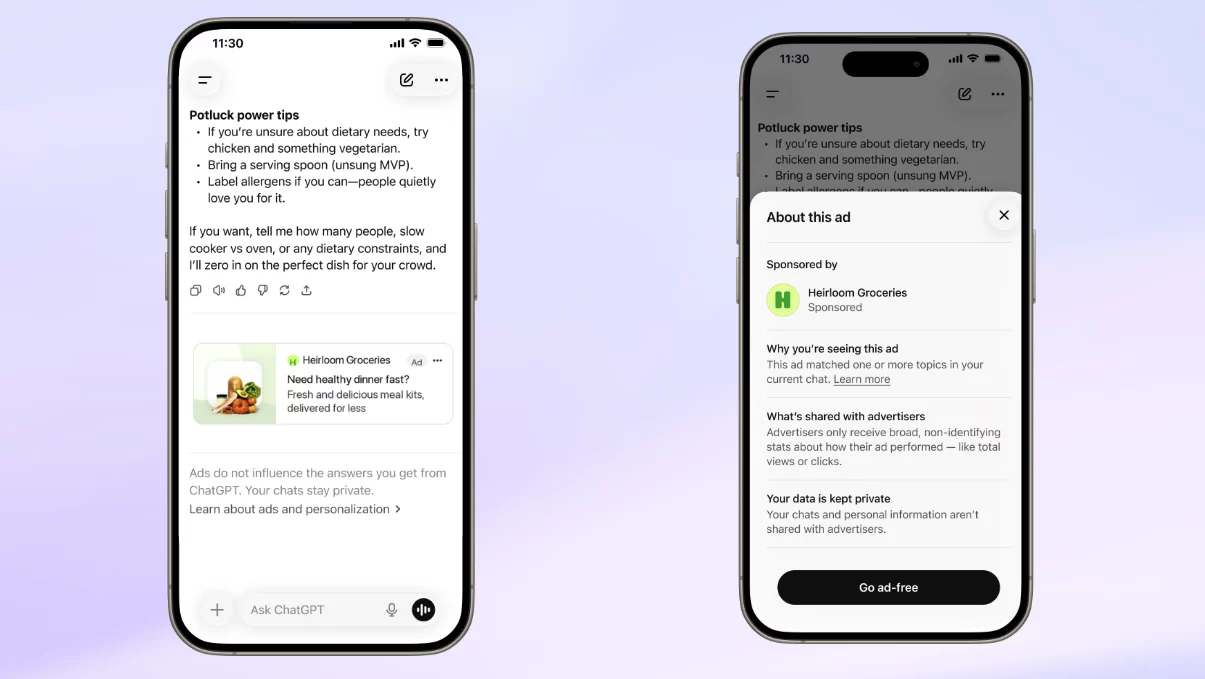
Every ad in ChatGPT appears below the AI’s response, never blended into it, and always includes these elements:
- Advertiser name
- Favicon or logo
- Headline
- Description text
- Landing page
- Image or creative asset
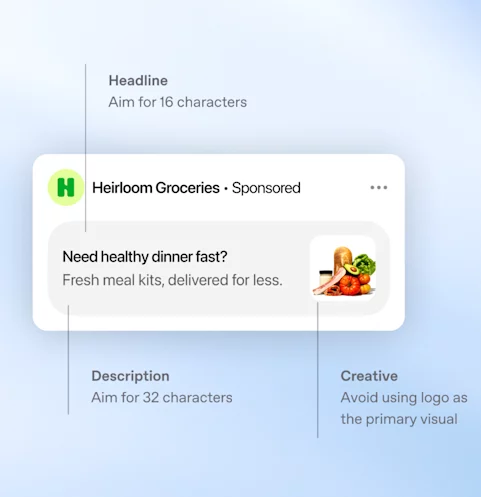
The system selects and delivers ads in ChatGPT based on relevance and expected outcome. It factors in the context and intent of the current conversation, the landing page, the headline, the text, and context cues the advertiser sets at ad-group level. These cues describe topics or conversations where the product may be relevant, but they are not exact-match keywords and do not guarantee delivery in a specific conversation. When ad personalization is enabled, the system also factors in signals from the user’s broader ChatGPT usage.
Since March 2026 the platform expanded to three formats: the sponsored answer card (the base format, a single ad below the response), a product spotlight carousel for ecommerce (image, price and direct checkout link), and a contextual sidebar placement, desktop-only, using standard industry creative sizes. All three are always labeled as sponsored content (Single Grain).
Who sees ads in ChatGPT
Not every user sees ChatGPT Ads. OpenAI does not show ads to Plus, Pro, Business, Enterprise or Education accounts, nor to accounts identified as under 18. Ads only reach users on the free and Go plans.
ChatGPT Ads pricing: how much it costs to advertise
ChatGPT Ads supports three buying models: CPM (cost per thousand impressions, Reach objective), CPC (cost per click, Clicks objective) and, since August 2026, oCPC (conversion-optimized CPC): you still pay per click, but the system prioritizes auction participation based on each user’s predicted conversion probability. Pure conversion bidding (CPA) reached early access earlier, on June 5, 2026, for selected advertisers (Choice Marketing). Advertisers set a maximum bid at ad-group level, and Ads Manager flags whether that bid is competitive. The final selection is resolved through a relevance-weighted second-price auction.
According to OpenAI’s official documentation, the recommended starting bid for CPC campaigns is between $3 and $5 per click. The model has evolved fast: at its February 2026 launch, entry CPM was around $60 with a $200,000 minimum spend, a threshold that disappeared once self-serve opened in May. Today CPM can drop to around $25, and CPC varies by sector. The minimum daily budget per campaign also varies by billing currency (for example, $25 on USD accounts); for euro accounts it is worth confirming inside Ads Manager at account setup, since OpenAI has not published a fixed euro figure yet.
| Sector | Estimated CPC | Estimated CPM |
|---|---|---|
| Software and finance | $8-18 | $30-60 |
| Ecommerce and retail | $3-5 | $25-40 |
| General entry average (2026) | $3-5 | from $25 |
Which countries have ChatGPT Ads (Spain included)
The rollout has been gradual. Australia, New Zealand and Canada got ChatGPT advertising on April 17, 2026. The UK, Mexico, Brazil, Japan and South Korea joined on August 11. Shortly after came the expansion to 31 European countries, including Spain, Germany, France, Italy, Sweden, Norway, Denmark, the Netherlands and Austria.
OpenAI notes that Ads Manager availability by country keeps evolving as testing expands, so it is worth checking current status before planning budget.
How to launch your first ChatGPT Ads campaign
Ads Manager Beta covers the full campaign flow: creation, launch, measurement and adjustments, all from a single dashboard.
1. Create your Ads Manager account
Sign-up asks for company details: name, website, headquarters country and the countries you want to advertise in. You also indicate the type of organization: agency, advertiser, technology partner or other. For more complex needs, OpenAI offers direct sales support.
2. Set up campaign, budget and objective
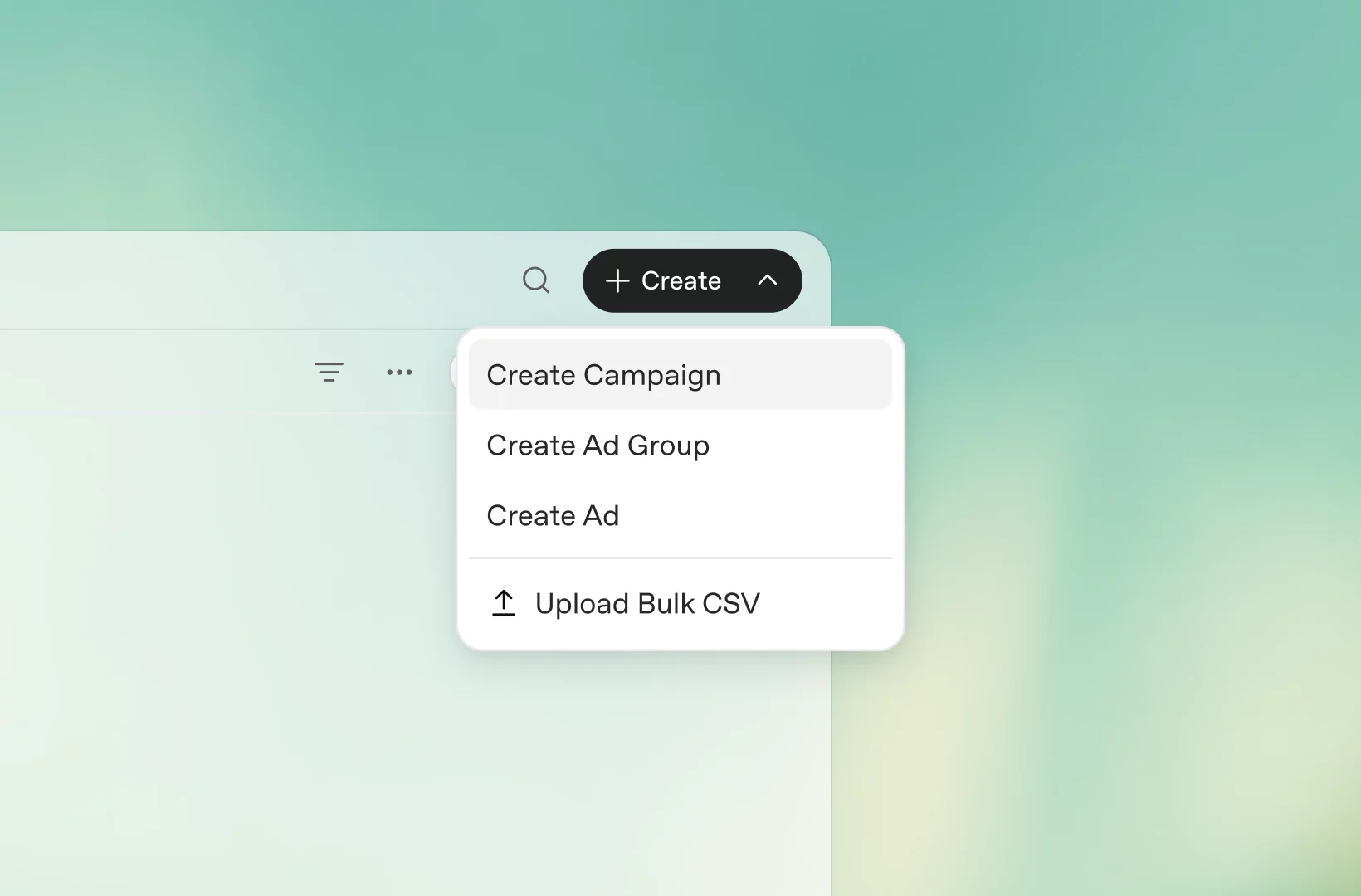
Define the objective (Reach, Clicks or oCPC), the budget and the maximum bid for the ad group. The “Create” menu in Ads Manager lets you create a campaign, ad group and ad, or upload a bulk CSV.
3. Add your ads
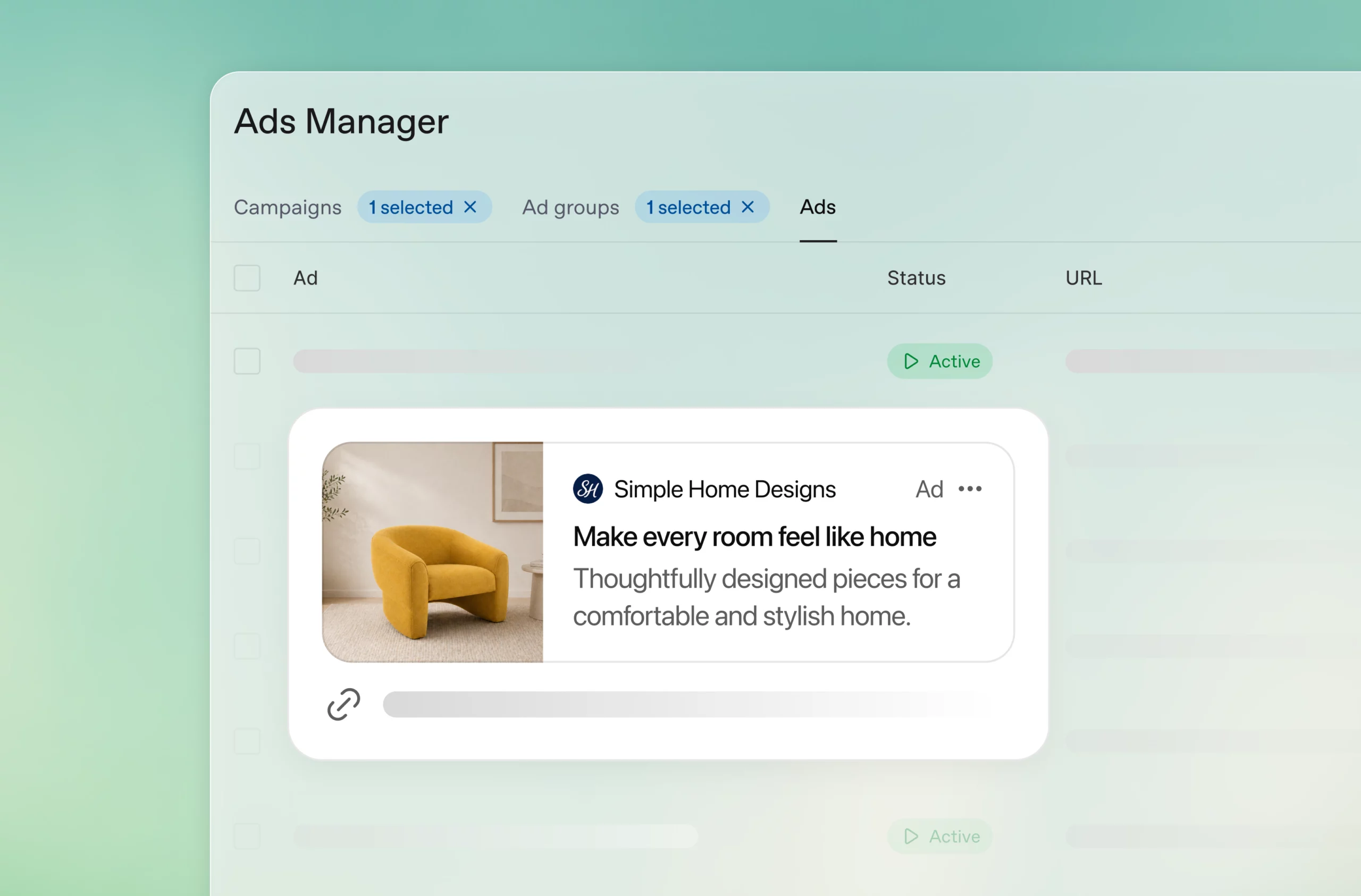
Ads can be created one by one directly in the tool, or uploaded in bulk, which is useful for large catalogs.
4. Launch, measure and optimize
Once live, the campaign is monitored from Ads Manager itself, with tables, charts and CSV export.
Measurement and results: what you can see in Ads Manager
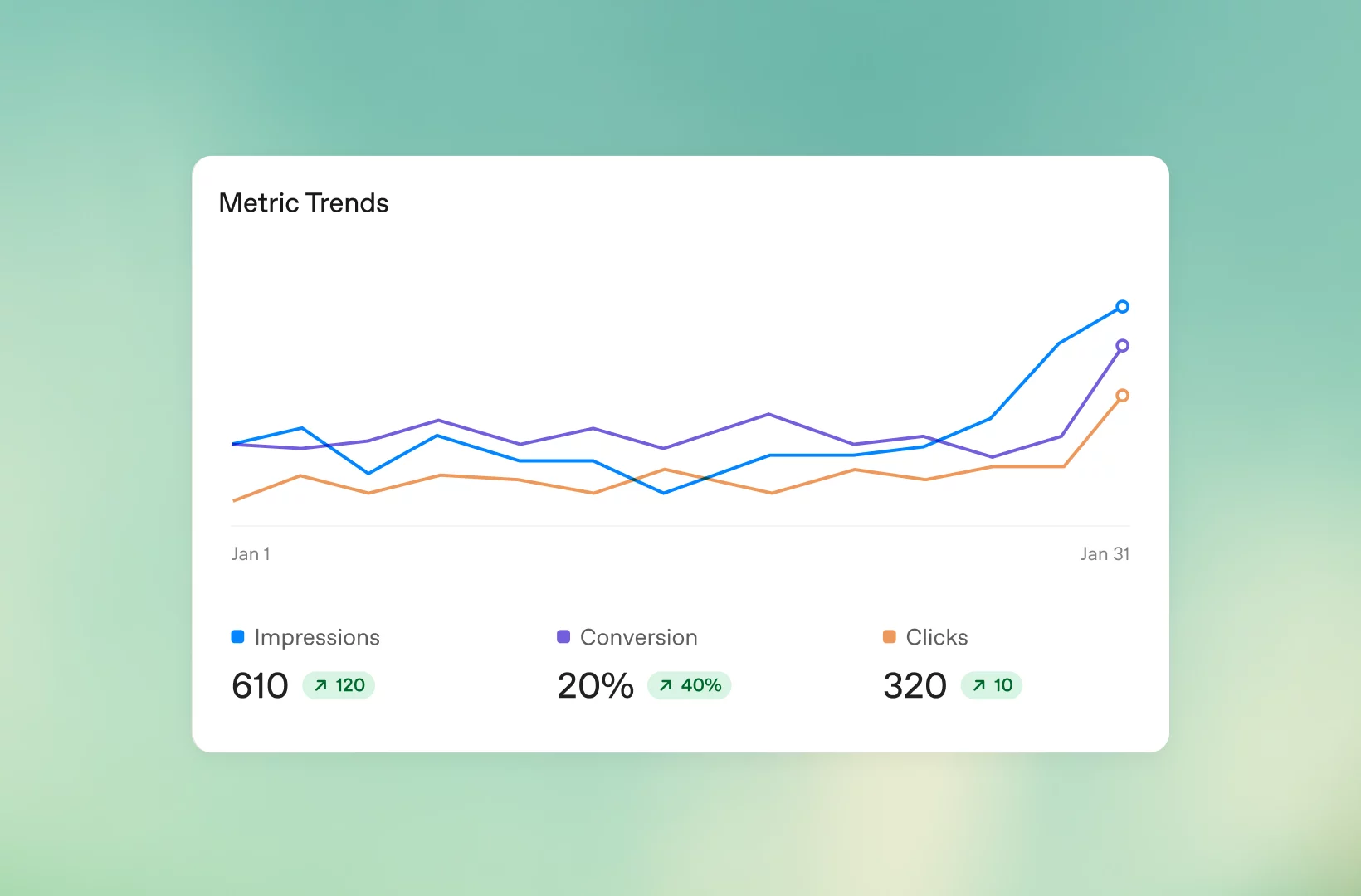
Ads Manager Beta reports include impressions, clicks, spend, CTR, average CPC, average CPM and conversions. To attribute conversions, you can set up conversion tracking inside the platform or add UTM parameters to landing page URLs, which are preserved on each click and work with the analytics tools you already use.
Early advertisers (Newegg, Best Buy, Lowe’s and VistaPrint) are already reporting results. Alec Shao, Newegg’s Head of Performance Marketing, put it this way: “We want Newegg to be part of the conversation when someone is researching what to buy. Showing up in ChatGPT helps us position ourselves as an option at that moment.” According to OpenAI, the ads business surpassed $100 million in annual recurring revenue in under 60 days after launch.
Brand safety in ChatGPT Ads
OpenAI applies three principles to advertising in ChatGPT: clear labeling of every ad, visual separation from the AI’s responses, and user control over how their data is used for personalization. Company policy is to avoid showing ads near sensitive conversations or in contexts that are not brand-safe.
Why ChatGPT Ads is different from Google Ads and Meta Ads
The core difference is not the format, it is the moment of activation. On Google Search, the ad fires on a keyword: the query is short, often ambiguous, and the user is in exploration mode. On Meta Ads, the ad interrupts someone consuming content, targeted by inferred interests and past behavior: the user is in entertainment mode. On ChatGPT Ads, the ad appears once the user has already articulated their need precisely, given the conversation context, and expects an action-oriented answer: the user is in decision mode.
| ChatGPT Ads | Google Ads | Meta Ads | |
|---|---|---|---|
| Primary signal | Conversation context and intent | Keyword | Behavior and interests |
| Format | Answer card, product carousel or contextual sidebar | Text, shopping, display, video | Feed, stories, reels, display |
| Bidding model | CPM, CPC or oCPC, 2nd-price auction | CPC, CPA, tROAS | CPC, CPM, CPA |
| Own display network | Not yet | Yes (Display Network) | Yes (Audience Network) |
| Channel maturity | Beta, August 2026 | Mature | Mature |
That brings ChatGPT Ads closer to the buying intent that traditional PPC campaign management captures today, but without the exact segmentation control that programmatic advertising teams are used to. It remains a beta channel: no display network of its own yet, more limited reporting than Google Ads or Meta Ads, and relevance rules that are still being tuned.
The sweet spot: cheap attention, unsaturated inventory
In digital marketing, the most profitable moments for an advertiser repeat themselves: a channel has real audience but not much advertising competition yet. That imbalance, lots of attention and little demand for inventory, is what performance marketers call underpriced attention: quality attention priced below its real value. Facebook Ads had it in its early years, Google Search had it in its early stage, TikTok Ads had it at launch. The brands that got in early on each one built up data, algorithmic learning and brand recognition that late entrants took years to match.
ChatGPT Ads in Europe is at that moment right now. Inventory is not saturated, CPCs reflect a launch price rather than a mature one, and the audience is already there: more than 8.5 million people use ChatGPT every week in Spain alone, and more than 14 million counting occasional use, according to Spain’s National Technology and Society Observatory (iaprozone). Industry analysts also report click-to-conversion rates up to 4 times higher than Google Search in comparable verticals, because the user arrives at the conversation already self-qualified, having described their problem, their constraints and what they are comparing (Lapis). That imbalance will not last: once large European advertisers finish setting up their accounts and scale budget, inventory cost will rise.
What we’re already seeing at Cronuts testing ChatGPT Ads
We test everything at Cronuts before running it for clients. Here is what we have already seen using ChatGPT Ads:
- What makes this channel different is not just volume. It is timing. Here the user is not scrolling: they are asking a question and making a decision.
- We already have it live at Cronuts Digital. And the first data points are beating the metrics we get from equivalent paid social channels, especially CTR and CPA: more qualified audiences, more purchase intent and a lower cost per lead on mid-to-high ticket offers.
Which brands should activate ChatGPT Ads now
Not every brand has the same immediate return potential on this channel. In this early phase, the profiles with the most opportunity are:
- Mid-to-high ticket products and services. When the decision involves prior research and comparing alternatives (enterprise software, financial services, executive education, private healthcare, consulting, premium travel), ChatGPT is a natural touchpoint in that process.
- B2B with consultative sales cycles. Decision-makers use ChatGPT to speed up research. Showing up at that moment, with the right message, can shorten the sales cycle and cut down on touchpoints.
- Sectors with heavy comparison queries. Insurance, banking, telecom or consumer electronics and auto ecommerce are categories where users regularly ask “which is best for my case?” ChatGPT Ads lets you be present in that answer.
- Brands already investing in GEO. If a brand already has a presence in citable sources and content structured for AI, ChatGPT Ads adds a paid visibility layer that amplifies that organic work in the same ecosystem.
How ChatGPT Ads fits into an integrated marketing strategy
ChatGPT Ads does not work well as a standalone channel. It performs when it is part of an integrated marketing strategy: the same brand message present in SEO and GEO, in paid media, and in the ad that shows up inside a ChatGPT conversation. Running it in isolation, without connecting signals across channels, repeats a mistake worth avoiding: buying separate, disconnected marketing services rarely moves the needle the way an integrated system does.
Inside an integrated strategy, ChatGPT Ads plays a specific role in the funnel:
- SEO + GEO builds the organic presence that gets your brand cited by ChatGPT for free.
- Paid media (Google, Meta and now ChatGPT Ads) captures active demand with the same message on every channel.
- Content feeds both organic citation and the landing pages behind the ads.
- Connected analytics measures which channel drives real pipeline, not isolated impressions.
That is how we run an integrated marketing strategy at Cronuts: as a growth system with paid media, SEO+GEO and content connected to each other, not as separate services competing for budget. If you want to know whether your brand fits ChatGPT Ads inside that system, we can evaluate it with you.
Frequently asked questions
What paid media teams ask us about ChatGPT Ads.
7 concrete questions with actionable answers in under 80 words.
How much does it cost to advertise on ChatGPT?
Is ChatGPT Ads already available in Spain?
Do ChatGPT Plus users see ads?
Do I need a ChatGPT advertising agency to get started?
What is the difference between ChatGPT Ads and a Google Ads campaign?
How is ChatGPT Ads campaign performance measured?
What kind of companies are already advertising on ChatGPT?
Can you afford to stay out of a channel where millions of people search for answers every day?
Every new advertising channel has a window where cost per result is lower because fewer advertisers are bidding. That window is already open on ChatGPT Ads, with more than 8.5 million people searching for answers every week in Spain alone. We’re already in at Cronuts Digital. Contact Cronuts Digital and request your free diagnostic. Before your competitors do.