
TL;DR · executive summary
What you’ll find in this article
You want to stop financing clicks that don’t sell and start investing with measurable return: for that you need to understand how performance marketing works. We are talking about moving from ornamentation to decision: aligning message, offer and page so that each impact moves business, measuring what matters and cutting what does not drive results. It’s a system, not an occurrence: clear diagnostics, pur...
You want to stop financing clicks that don’t sell and start investing with measurable return: for that you need to understand how performance marketing works. We are talking about moving from ornamentation to decision: aligning message, offer and page so that each impact moves business, measuring what matters and cutting what does not drive results. It’s a system, not an occurrence: clear diagnostics, purposeful testing and focus on conversion and checkout.
Según Statista (2025), el mercado global de marketing digital alcanzará los 786.200 millones de dólares en 2026, con un crecimiento interanual del 10,1%. — Fuente: Statista, Digital Marketing Report, 2025
As a digital consultancy that builds growth, we explain how performance marketing works when applied to B2B, with a practical and business-oriented approach. We’ll start by clarifying concepts without smoke and mirrors…
What is performance marketing when the priority is real growth?
Performance marketing is a system. Money comes in, measurable actions go out, results come back. If there are no results, the system is corrected. Its focus is simple: capture qualified leads at a controlled cost, increase the conversion rate and protect profitability. It is not a single tactic; it is a way of operating that aligns acquisition, content, creative, landing pages, CRM and analytics to impact revenue. In B2B, where the cycle is long and buying is rational, performance becomes the lever that separates noise from revenue.
How performance marketing works from start to finish
For the system to breathe, each piece has a role. Let’s look at the flow, from first impression to closure.
Decision-driving objectives and not vanity metrics
It all starts with an operational definition: MQLs volume, CPL cap, SQLs rate, target CAC, desired payback and attributed pipeline. If the target does not connect with
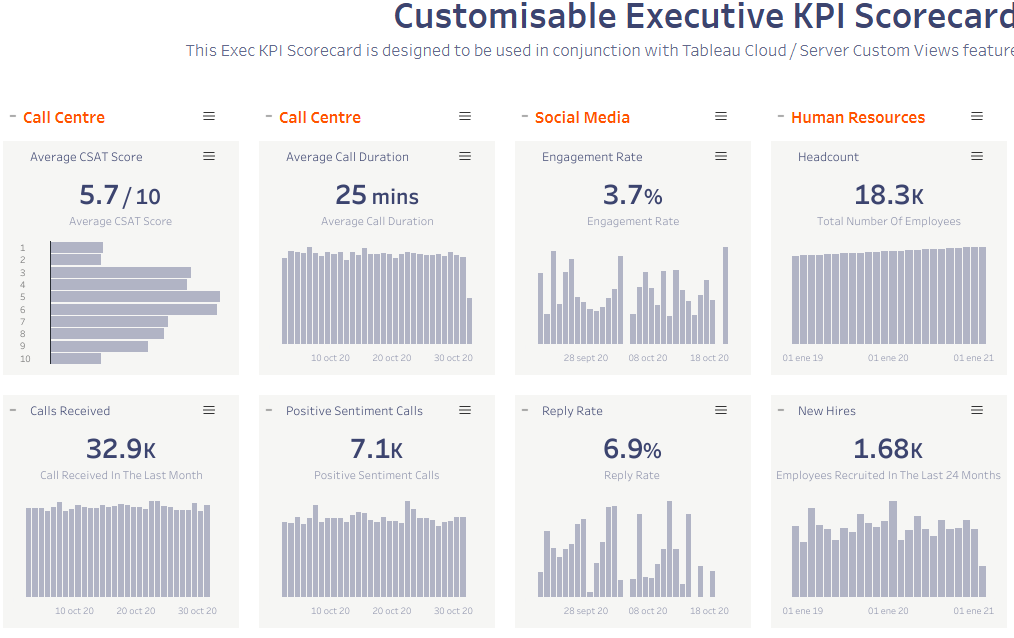
Recruitment levers that convert clicks into customers
Performance lives in search engines and networks, yes, but the key is intent and message fit. In search, attacking terms of pain and solution cuts the path to conversion. In social, the job is to generate demand with creative that explains value and a clear offer that pushes to the next stage. Display and retargeting sustain recall and bring the user back with concrete proposals, not generic slogans. Affiliation and partnerships come in when you need to expand reach with variable cost.
Here’s the point: to understand how performance marketing works is to understand which campaign opens the door (awareness with useful content), which captures intent (transactional search), which accelerates the decision (retargeting with social proof and proof of value) and which solidifies the close (follow-up email and dynamic remarketing with business proposition).
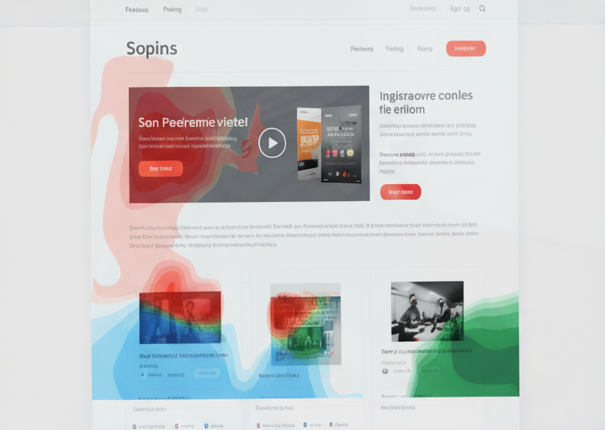
Message, offer and landing: the triad that defines conversion rate
Without a message that speaks to the real pain and an offer that lands on a landing that is understood in five seconds, the system loses air. The user must see benefit, test and next step. The form asks just enough to qualify. The value you give in return (demo, audit, operational checklist) filters curious and attracts

Measurement and attribution: tracking that lets you decide
In performance, traceability is not a whim; it is budget governance. You tag campaigns, define conversions, integrate events with CRM and build a dashboard that answers business questions: which channel introduces the most opportunities, which creative drives the first response, which keyword brings MQLs that move to frictionless SQL. Attribution is not religion; it’s utility. First interaction to understand what discovers you, data-driven to apportion merit and models to be able to decide cutbacks and double-bets. If you can’t see the opportunity cost of each euro, you decide blindly.
Post-click experience and sales enablement: where ROI is truly earned
The contact arrives, now what? Clear SLA with sales, contact cadence, scripted value proposition and supporting material that connects the pain identified in the campaign with the use case that solves the problem. Performance marketing is also played out in the inbox and on the phone. Without that bridge, you will grow in leads but not in business.
The B2B funnel managed with performance: from cold to customer
TOFU: content that gains relevance and opens conversation. Here we measure cost per qualified visit and micro conversions (downloads, full views, registrations). The goal: to build audiences and signals to lower the actual cost of engagement.
MOFU: offers that trigger a desire for evaluation (demos, audits, real cases). This is where retargeting comes into its own, with creatives adapted to objections and proof of value. Conversions go up, cost per opportunity goes down.
BOFU: push to decision with reasonable urgency. Clear proposals, transparent comparatives and testimonials that prove impact. Performance here must deliver quality, not empty volume. How performance marketing works in this phase is simple: every euro must show its expected return.

Budget, cost-effectiveness and speed of learning
There is a question we get asked every week, “How much do we start with?”. Sufficient to validate hypotheses in short cycles. If the market has active searches, the initial mix prioritizes search with latent demand capture and retargeting with concrete offers. If the market needs education, we increase investment in high-value content and creative sequences that build category. Profitability does not come by waiting; it comes by accelerating learning. Messages and angles are tested, not colors. Value propositions are tested, not embellishments.
How does performance marketing work when it comes to money? You invest to buy quality data that allows you to cut what doesn’t sell and double what does. If after two weeks there are no signs of life (qualified CTR, time on page, initial MQLs), you don’t insist; you move pieces. If there is a signal, you scale by steps, always keeping an eye on CAC and attributed pipeline.
Diagnosis, method and scorecard: the system that does not fail
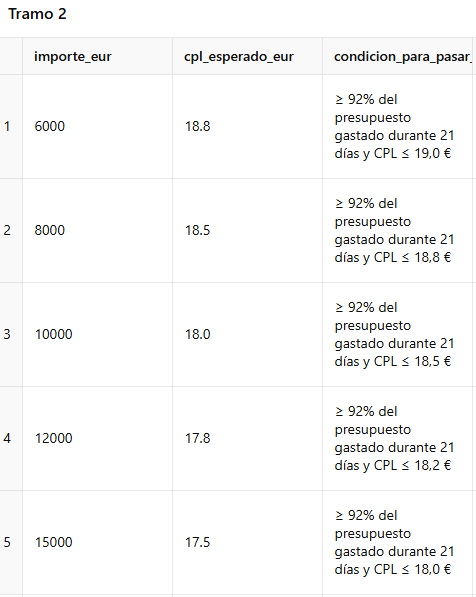
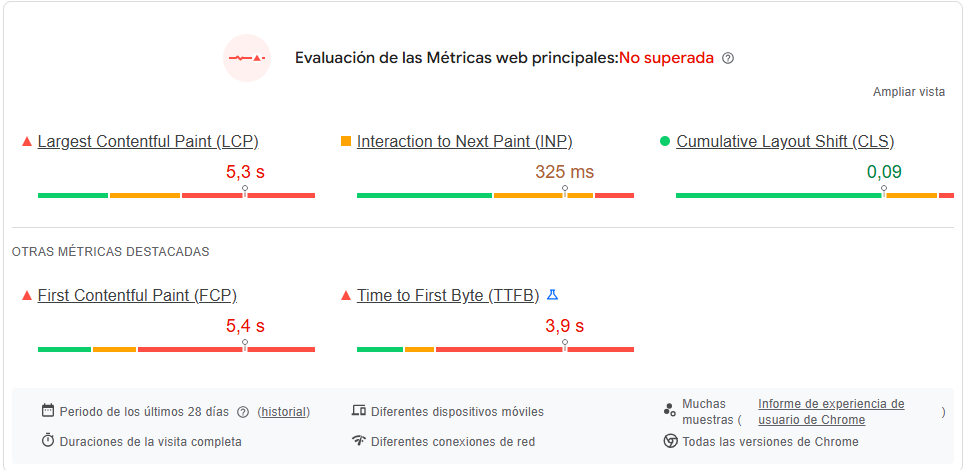
No diagnosis, no plan. The actual status is audited: messaging, pages, speed, tracking, data quality in CRM, consistency between ad and landing, response times and closures. Then the method is defined: clear hypotheses, a test backlog prioritized by impact and effort, metrics that dictate next steps and a scorecard that everyone sees. That’s how performance marketing works when it’s done for real: with focus and discipline. The scorecard focuses on:
- Acquisition: useful impressions, qualified CTR, effective CPC, share of impressions on converting terms.
- Conversion: registration rate per source, MQL→SQL rate, SQL→Opportunity, Opportunity→Sale, average value and payback.
- Economic unit: CAC per channel, estimated LTV, margin and opportunity cost of each decision.
With this, the team stops discussing opinions and executes decisions.
Creativity that sells: from pain to proposal
No empty slogans. Creativity in performance is a direct conversation with the customer’s problem. If the pain is “unstable pipeline”, the angle is “predictability with less CAC”. If the problem is “commercials with no appointments,” the angle is “system that delivers opportunities on schedule.” It is written with verbs, with evidence, and with a CTA that asks for action: book demo, request diagnostics, download material that really helps.

SEO and performance: two engines, one direction
Anyone who believes that SEO and performance compete is confusing tactics with a system. Paid traffic<\/a> buys learning speed; organic traffic consolidates in the medium term the capture of the same intention. Campaigns are used to discover messages and objections, and are translated into content that positions. Performance feeds SEO with real intent data; SEO feeds performance with pages that convert better and lower the effective CPC thanks to the quality of the target.
Data, privacy and attribution that allows for scalability
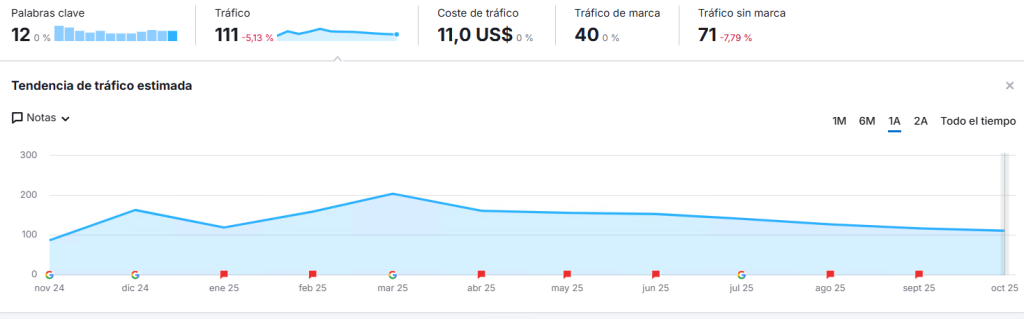
Today’s reality demands respect for privacy and mastery of first-party data. Clear consents, well-defined events, solid integration with CRM and attribution models that survive the current ecosystem. Back to usability: what do you need to decide? Knowing which channel opens valuable relationships, which message converts, what timescales you need for payback. That’s how performance marketing works when you look at it with business eyes.

Mistakes that kill results (and how to avoid them)
The first mistake is to buy traffic without a clear proposition. Second, asking the user to do too much on the first visit. The third is to measure half-heartedly. The fourth is to romanticize a channel even if it doesn’t perform. Fifth, delegating sales to marketing or marketing to sales, instead of aligning both with a simple SLA: response time, number of attempts, script and feedback to the campaign team. It is avoided with diagnosis, method and shared responsibility. All things being equal, the problem is not the market; it’s the system.
How to prioritize: decisions that impact tomorrow
If you have a limited budget today, prioritize searches with intent, fix your main landing page, set up reliable tracking and define valuable material that qualifies. With that, in two weeks you’ll know which messages deserve to scale. Then, retargeting that speaks to testing, real case and risk reduction. Then, creative to generate demand in social with angles that attack objections. Each step should move a number that matters at checkout.
System health metrics: what I review every Monday
I check the relationship between share of impressions on the keywords that really bring opportunities and the CPL of those same words. I check MQL→SQL rate by source, contact times and most repeated cause of loss. I check if the previous week’s tests moved conversion rate or just liked by the team. I check if the CAC is within range and if the attributed pipeline sustains the quarterly billing target. If something doesn’t add up, I don’t look for an excuse; I correct it.
Un estudio de Deloitte (2025) revela que las empresas con estrategias digitales integradas obtienen un 23% más de rentabilidad que las que operan con canales aislados. — Fuente: Deloitte Digital, 2025
Cases and signs that the system is working
When the system is well configured, three things happen: the opportunity cost goes down while maintaining quality, the CRM progress rate goes up and the weekly pipeline stabilizes. Patterns appear: certain messages open doors, certain objections are repeated and resolved with a specific piece, certain segments respond better to certain tests. The team feels it because it stops “chasing” and starts to scale what already has a rhythm.
Frequently Asked Questions
What CMOs and directors ask us.
8 concrete questions answered in ≤ 80 words · optimal format for AI Overviews.
How do I estimate the addressable market before investing?
What signs indicate creative fatigue and when to rotate ads?
Which bidding model to choose when there are few conversions?
How to address sectors with low search intent and consultative selling?
How do I manage seasonality without triggering the CAC?
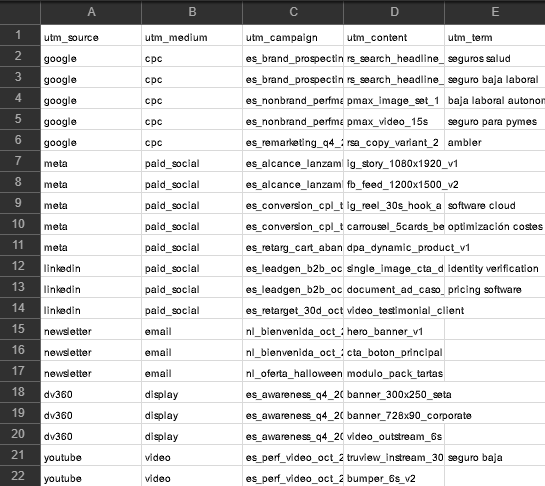
What structure of UTMs and names avoids losing data when scaling?
utm_source=platform, utm_medium=channel (cpc, social, email), utm_campaign=objective_benefit_segment, utm_content=creative_variation, utm_term=keyword or audience. Document the dictionary of valid values (e.g., "decision-makers_saas_en") and share it with the whole team. Check that UTMs arrive in the CRM without rewrites and that reports group by campaign and content in a consistent manner. Without a firm convention, comparing performance between months or countries becomes impossible.