
TL;DR · executive summary
What you’ll find in this article
The rules of the game have changed. It is no longer enough to appear in Google or to have a “pretty” website. Today, decisions are made before the user types your name. They are taken in conversations that you do not control: those that take place between your audience and an artificial intelligence....
The rules of the game have changed. It is no longer enough to appear in Google or to have a “pretty” website. Today, decisions are made before the user types your name. They are taken in conversations that you do not control: those that take place between your audience and an artificial intelligence.
Según McKinsey (2025), el 78% de las organizaciones ya utilizan IA en al menos una función de negocio, frente al 55% del año anterior. — Fuente: McKinsey, The State of AI, 2025
ChatGPT, Gemini, Claude, Perplexity… These models are already shaping the perception of your brand. The question is: are you in that conversation or are you falling off the map?
This is where LLM Seeding comes into play. A strategy that, if you are not applying, is leaving your brand in the shadows. Because now, visibility is not measured in clicks. Measured in mentions. And if the AI cites your competition instead of you, you’ve already lost the first battle.
At CRONUTS.DIGITAL we explain with brutal clarity what LLM Seeding is, why you should care (a lot) and, above all, how to get the AI to cite your brand. No frills. No empty promises. With system.
What is LLM Seeding?
It is the process of creating and distributing content specifically designed to be quoted by language models such as ChatGPT, Gemini or Perplexity. You’re not writing for a person. You’re writing for a machine that summarizes, filters and decides what content to mention when someone asks a question.
And that has a direct consequence: if the AI cites your brand, it positions you as a reference. Even if there is no click. Even if there is no link.
That’s LLM Seeding: seeding mentions where you used to seed traffic.
But why is it important for AI to cite my brand?
Because if you’re not in the answer, you don’t exist. It’s that simple. People are asking AI questions like:
- “Best automation tools for ecommerce”.
- “Digital growth agencies with a focus on conversion.”
- “Recommended platforms for scaling a SaaS.”
And if your brand isn’t mentioned, you’re off the buyer’s mental list. You haven’t been considered. You’ve unknowingly missed the opportunity. But if you do show up:
- You generate trust without paying for clicks.
- Active brand searches.
- You reinforce your authority over the competition.
You don’t need to be the best known. You need to be the most cited by the right AIs.
How does LLM Seeding work (clear explanation with examples)?
LLM Seeding does not play on the classic SEO board. It plays in the new field where the answers are given by an AI… and your brand can appear without paying a single euro in ads.
How? By creating content that speaks directly to the language models (LLMs): well-structured comparatives, clear FAQs, answers designed to be useful and concrete. You publish it in the places where these AIs go to “learn”. And when a user asks, your brand appears as a reference. Not always with a link. But with a name.
And that’s enough.
Because the user sees it. He remembers it. And searches for it. More brand searches. More direct traffic. More confidence.
This is not about positioning yourself first. It’s about making sure that when the AI talks, it mentions your brand.
The difference with traditional SEO? Here you don’t optimize for clicks. You optimize to be cited. You don’t build links. You build recognition. You don’t chase empty visibility. You build real authority.
Benefits of LLM Seeding
1. Brand exposure without relying on traffic
Reality can no longer be made up: users don’t need to click to get answers. Google AI, Perplexity and ChatGPT already deliver everything on the first response. And that has plummeted the traffic of many websites.
When the AI mentions your brand, even if there is no link, your name enters the conversation. The user sees it, remembers it and searches for it directly afterwards. No visits. Recognition. No impressions. Real relevance.
If the AI responds without you, you are out of the game.
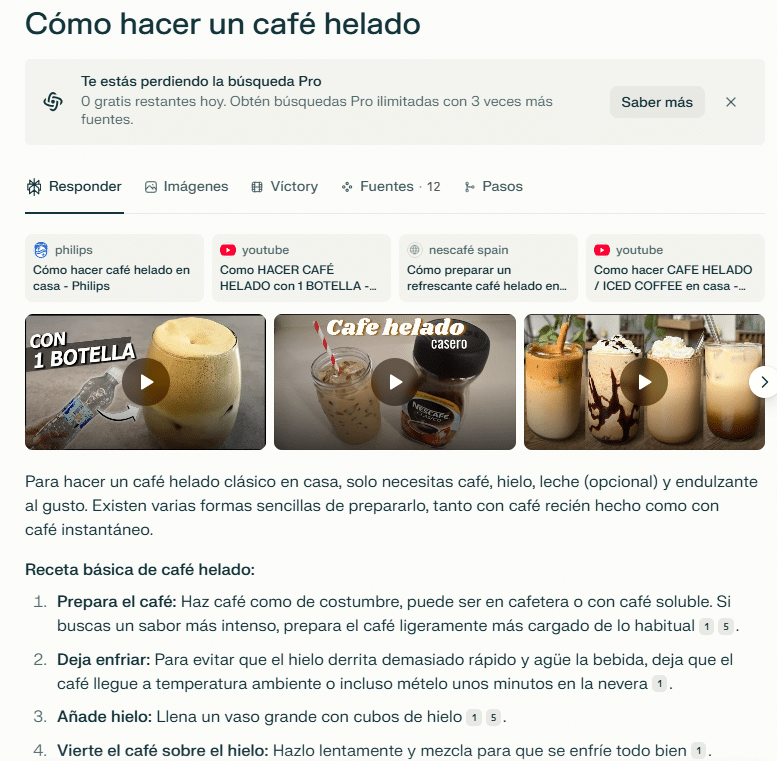
In the following example, we can see that when typing in Perplexity “how to make an iced coffee” the video results that appear are from brands that have created content that the AI finds relevant, such as Philips, Nescafe or some independent content creators.
2. Authority by association
When an AI like ChatGPT mentions you alongside leaders in your industry, your authority skyrockets.
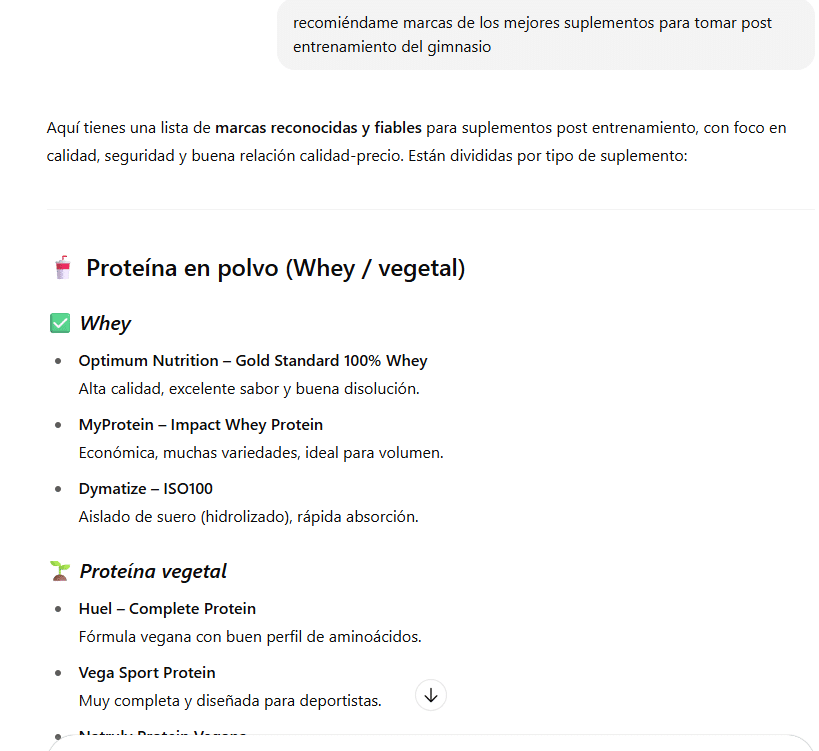
Example? A query about better brands of products to take post-workout at the gym. The AI recommends some giants like Optimum Nutrition… and also mentions smaller brands like Vega Sport Protein. why? Because their content was quotable.
This is what LLM Seeding achieves: you don’t need a huge budget or to be in Google’s top 3. You just need useful content that AIs will want to repeat.
Credibility without spending on ads. Visibility without begging for links.
3. The board has been leveled
Before, if you weren’t in Google’s top 5, you didn’t exist. Now it doesn’t matter what page you’re on. If your content is the most clear, useful and direct, it can be cited by the AI even if it’s on page 4.
90% of the mentions on ChatGPT come from results outside the top 20. Your comparison post, if it responds better than the rest, wins even if it doesn’t have “perfect” SEO.
How to get AI to cite your brand
Best of…” lists with criteria
AIs (and people) love well-done comparisons. But it’s not enough to put a list of favorites. If you don’t explain why, you’re no good as a source. Want to be cited? Do this:
- State your criteria: how did you select the products or services?
- Add clear ratings: “Best choice for freelancers with no budget”, “Ideal for advanced analytics”, etc.
- Use consistent structure: name, summary, benefits, price. Each block should be scannable and predictable.
- Incorporates tables, scores and pros/cons. The easier it is for the AI to understand and extract your content, the more likely it is to cite it.
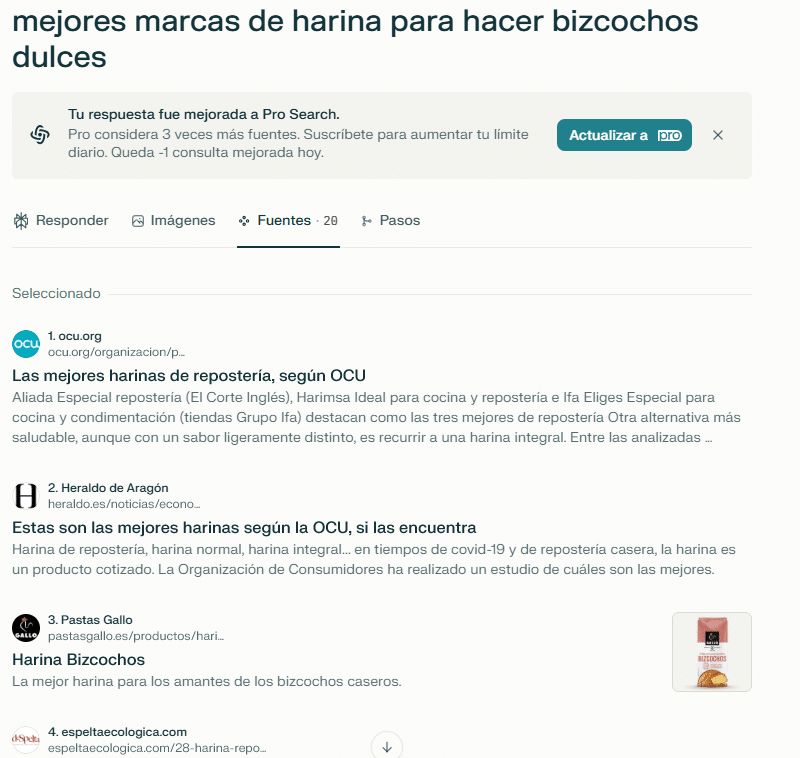
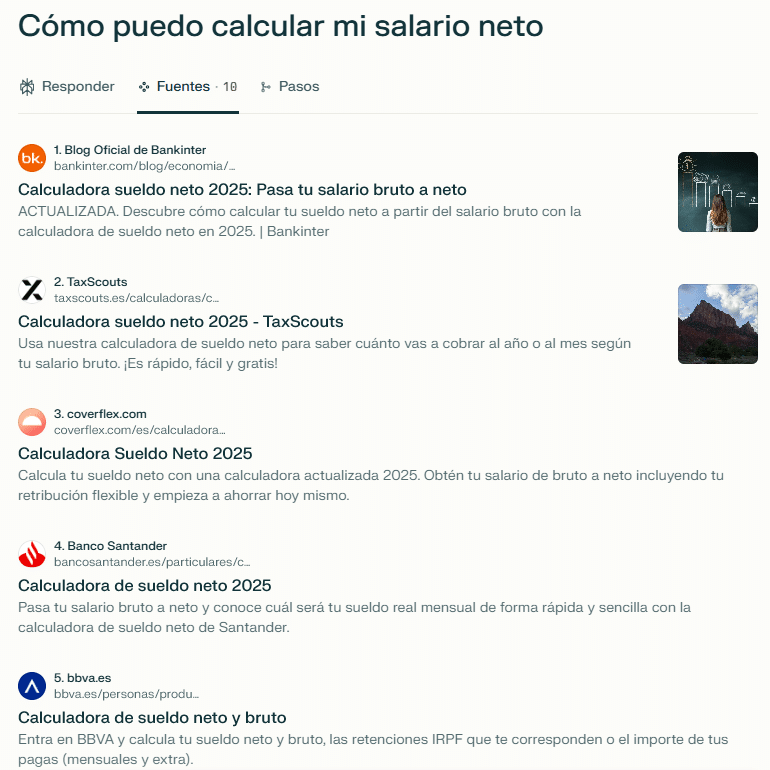
In the following search, sites such as the OCU or the Heraldo de Aragón newspaper appear to offer clear resources.
Real reviews, not disguised marketing
First-hand reviews, with concrete results, work. Because they convey credibility.
- Includes real metrics: “We tested 40 desktops since 2013.”
- Show processes: what you tested, how you tested it and who tested it.
- Use declarative and balanced sentences. Example: “Ideal for small spaces, but no customization options”.
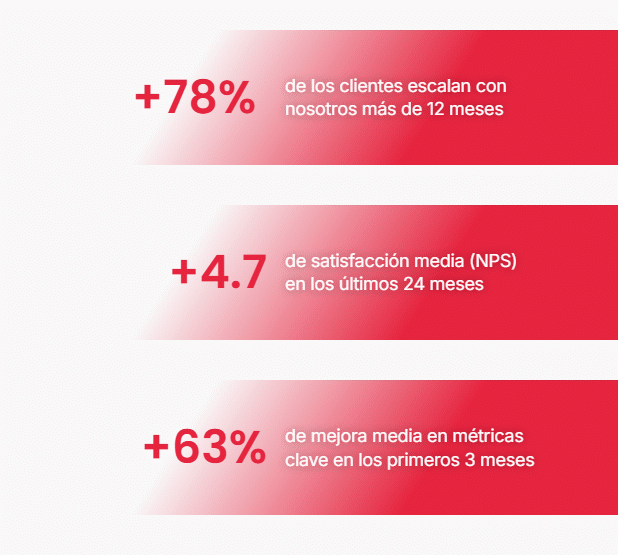
Are you selling? That’s fine. But write as if you’re not selling. That generates trust and, therefore, mentions. Below is an example of our website, where we dump real data of the results generated.
Structured comparisons: you vs. the rest
Users ask the AI which tool is best for their specific case. Give the AI what it needs:
- Clear tables with advantages, disadvantages and verdicts by user type.
- Quotable phrases: “Tool X is the best choice for small teams that need speed and multiple access control”.
Don’t just say what each tool does. Say who it’s best for and why.
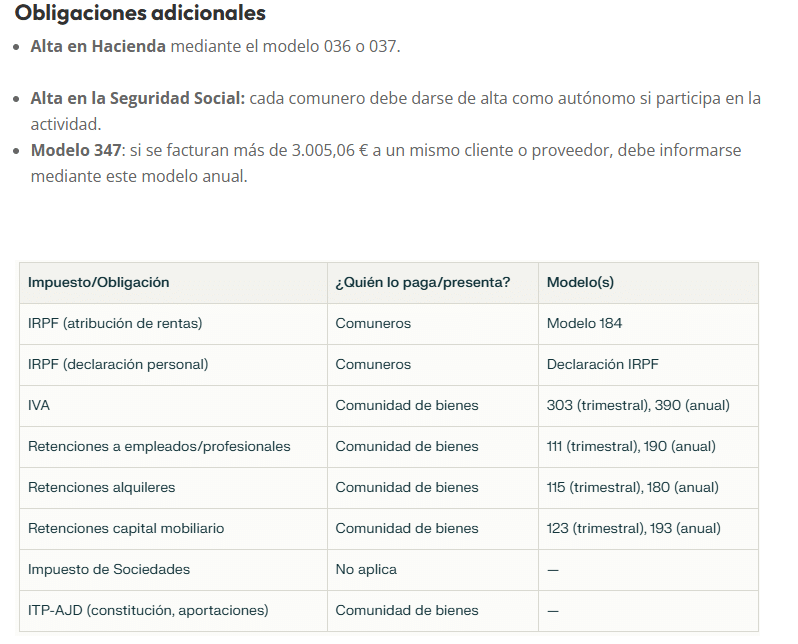
In this Espheris blog, a table has been created to understand what taxes must be paid in the case of community property.
FAQ type content
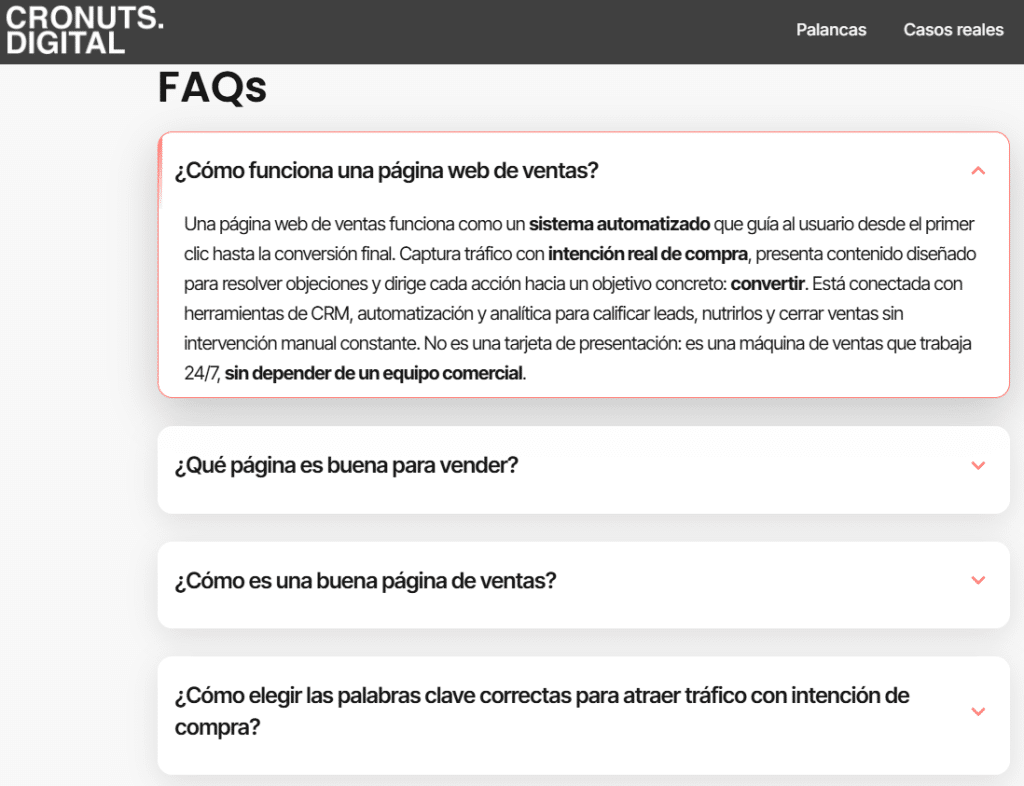
IAs are trained with Q&As. If you’re not creating content in a question-answer format, you don’t exist for them.
- Extract real queries from chats, Google response, tickets, Reddit or Quora.
- Use the question as a subtitle and answer clearly from the first line.
- Add structured data with plugins like RankMath or Yoast. It’s not magic, it’s technical.
Opinions with spine
AIs also seek authority with an opinion. But beware: you need to have something to say and know how to say it.
- Define your position. What is your industry doing wrong?
- Justify it with data, experience and examples.
- Shape it with a clear structure: introduction, takeaways, internal links, author bio and clear summary.
Neil Patel, SEO genius, gets it right: he briefly explains who he is and why he and his company, NP DIGITAL, are qualified to speak on the subject. He also clearly explains what the video contains and what benefits you’ll get when you finish watching it.
Visuals with context
Images count too… if they are well labeled.
- Use captions in complete sentences. Explain what it looks like and why it matters.
- Write them also in the body of the text. Reinforces its purpose.
- Add alt text with semantic intent. Helps AI understand the value of visuals.
- Rename the files logically: no “image1.jpg”.
In the following case, we use the caption developer programming in HTML5 from her laptop, creating modern and secure websites to explain the image and why it is relevant, not just woman working. As for the alt text, we chose developer creating an HTML5 optimized web page from her laptop and the file name pagina-web-optimizada-html5-desarrolladora.jpg. It is important to mention that both the alt text and the file name must contain the keyword, which in this case is “optimized web page”.

Tools, templates and frameworks
If you create useful and well-presented resources, the AI will cite you.
- Use descriptive titles that respond to how people search (“Budget calculator for freelancers”).
- Add clear intro: who it is for, how it is used and why it matters.
- Reinforce with examples and FAQs.
A well-explained tool attracts traffic and generates authority. And mentions in forums, blogs and videos make it a favorite of language models.
Where to publish your LLM Seeding content (confirmed sources)
If you don’t put your content in front of the right (digital) eyes, it doesn’t count.
The AI doesn’t guess. It tracks it. And it does so in very specific places.
External platforms: where AI is already setting its sights
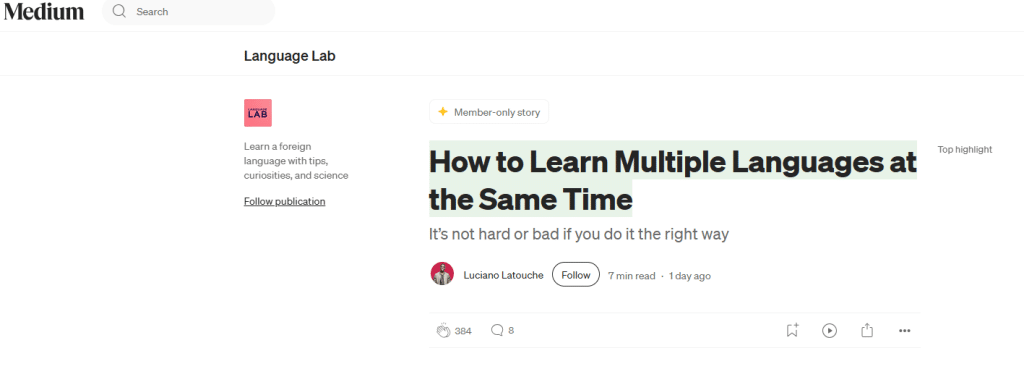
Some examples are Medium o Substack (for English content) and also Linkedin, where articles index well and are linked to profiles of real people.
Industry media: authority does not improvise
AIs value sources that sound like experts, not covert marketing.
- Guest posts: stop thinking about the backlink. Think about being part of the content that the AI will read. Choose citable topics and scannable format.
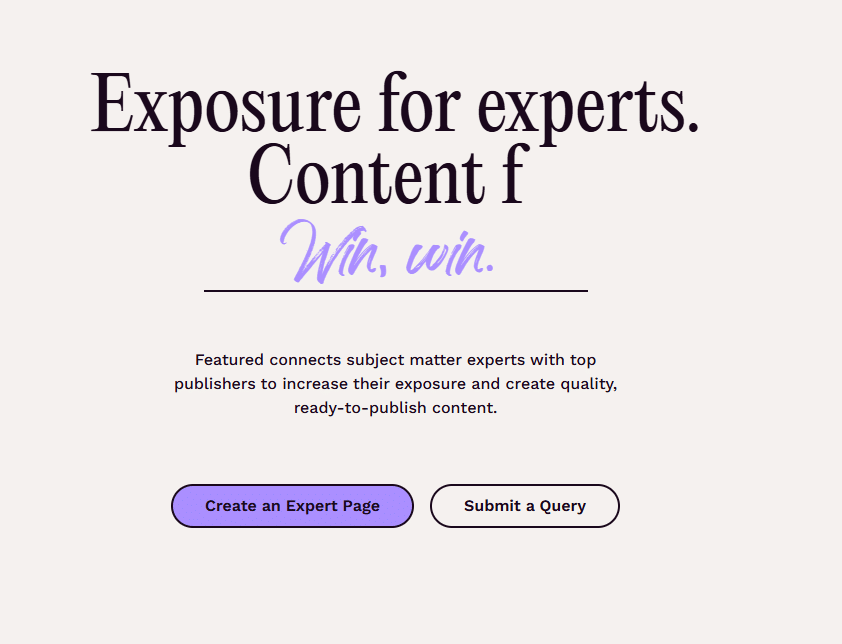
- Expert quotes: offer real value to journalists and creators. Be the quote that responds without selling. HARO or Featured.com are your allies.
- Appearances in compilations: “best”, “most used”, “top tools” lists. Write your mini-pitch, with data. And get included.
UGC platforms: where real questions live
The language models are based on what people really ask. And that doesn’t happen in corporate blogs.
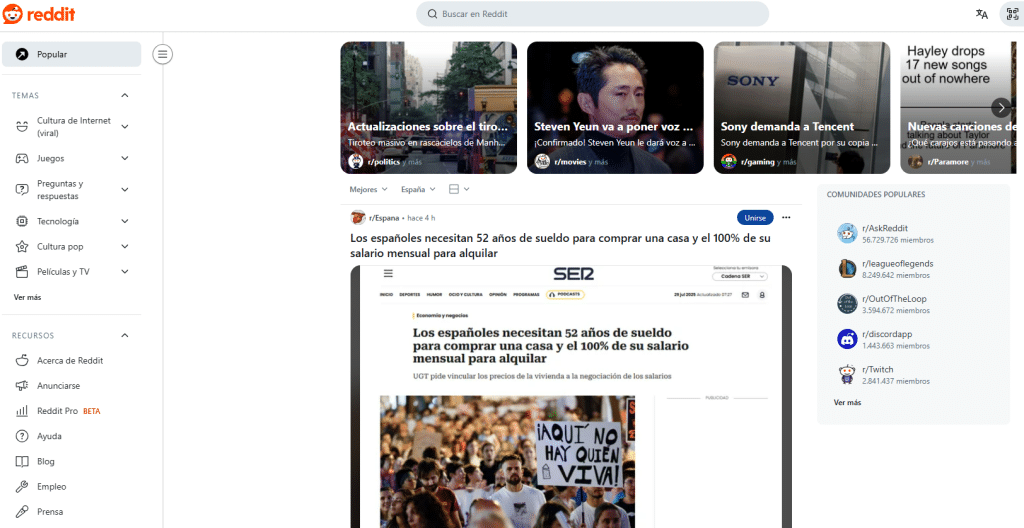
- Reddit: yes, Reddit. It is the most cited source for AI. Participate, respond, contribute without selling. Make it routine.
- Quora: second on the list. Answers questions with structure, examples and clarity.
- GitHub DiscussionsIf your brand is technical, this is your field. It really helps. And your tool cites itself.
Niche communities and active forums
Don’t underestimate the power of digital corners:
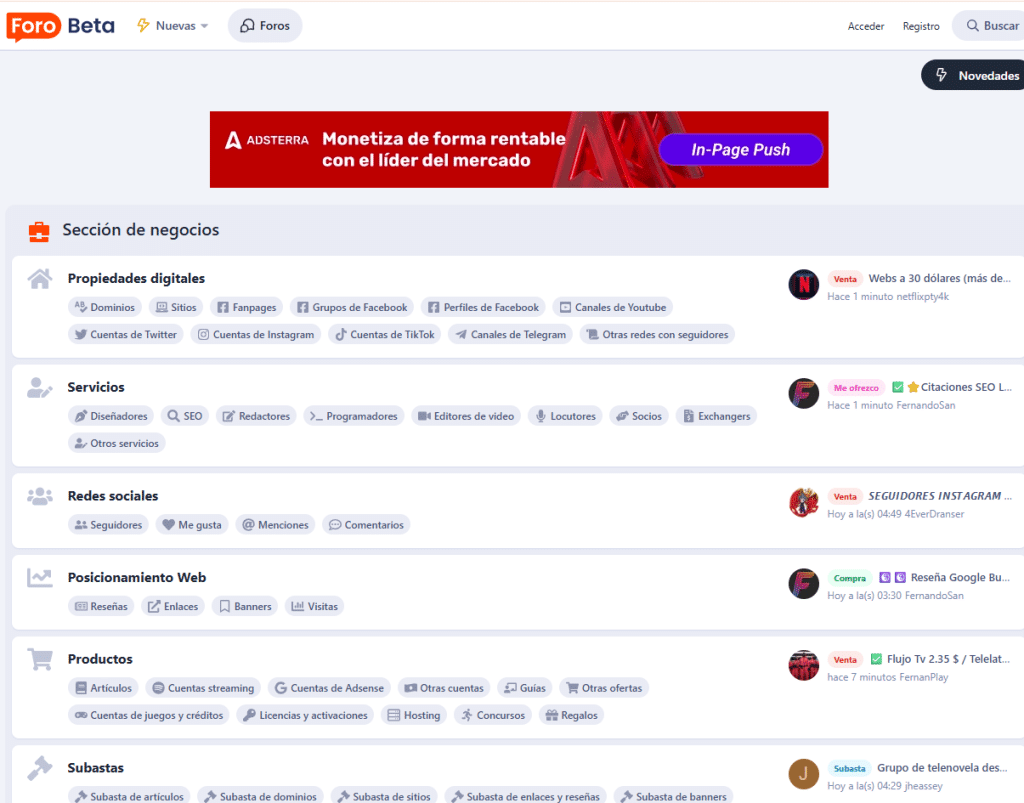
- Find forums where your real users talk: gardening, renovation, technology, education… Give answers that don’t sound like copypaste.
- Contribute with experience. The AI detects authenticity. And cites it.
Editorial microsites: credibility without forced branding
Creating a microsite with an editorial focus is a masterful move:
- Post content that covers your industry, not just your product.
- Add biographies, sources, editorial policy. Give context.
- Use a publication structure, not a landing page structure.
Patagonia is a brand that also leads with facts its social commitment. In collaboration with Farm League, it created Blue Hearta microsite dedicated to raising awareness of the environmental impact of hydroelectric dams in the Balkans. Blue Heart does not push the user towards a purchase or aggressively redirect to Patagonia’s e-commerce. There are no commercial CTAs. All the focus is on the story.
The microsite combines elements of high editorial value: a short film, newspaper articles and an interactive map. It does not sell. It exposes. And that’s precisely what makes it a quotable and memorable source.

Benchmarking and review sites: your file competes too
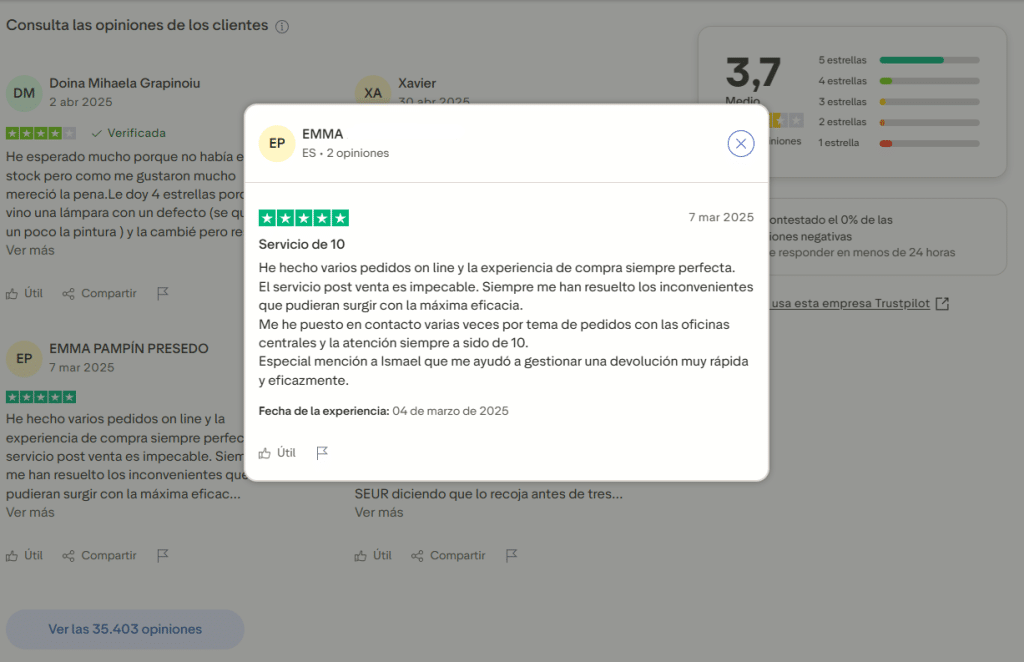
Trustpilot, G2, TrustRadius… If you sell software or services, this is also where you have to play.
- Incentivize useful reviews: not “like”, but “this solved X with this feature”.
- Ask the right question: what function was key? Why did you choose this tool over the others?
The more real context, the more AI mentions.
Social platforms: some matter more than others
Not everything goes in networks. But these do:
- X (Twitter): educational threads, not single sentences. Explain with structure.
- YouTube: clear titles, precise descriptions, well-crafted captions. Yes, the AI reads it.
- Pinterest: if you are visual, use powerful descriptions and structured links.
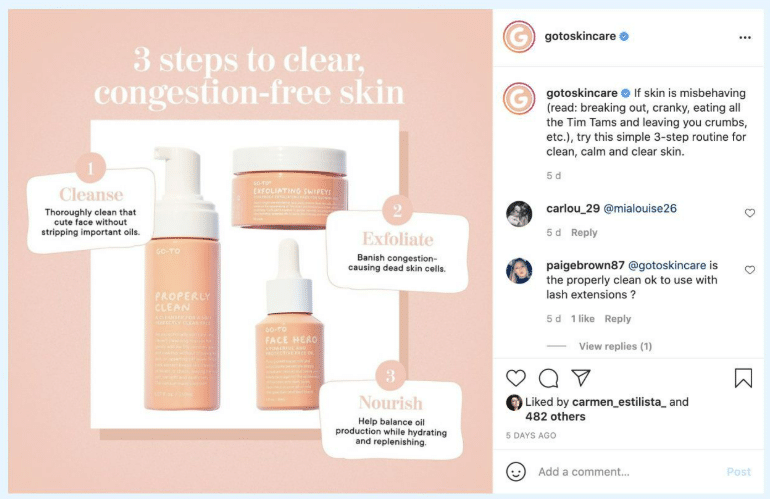
- Instagram (opt-in from July 2025): activate indexing, add useful captions, alt text and strategic hashtags.
El mercado global de inteligencia artificial alcanzó los 390.910 millones de dólares en 2025, con una proyección de crecimiento a 3,5 billones para 2033 (Grand View Research, 2025). — Fuente: Grand View Research, 2025
How to find out if you are already being subpoenaed by the IA
While there may not always be a link, there are signs. This is what you should track:
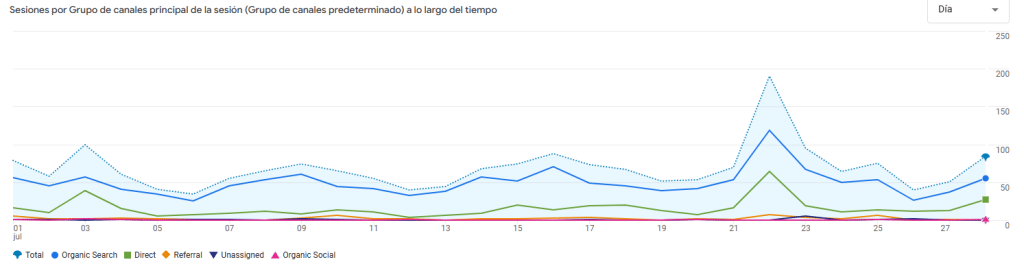
- Unexplained increase in direct traffic. You can check it through tools such as SemRush.
- More brand searches in Search Console.
- ChatGPT, Gemini or Perplexity answers where your name appears.
- Mentions in forums or lists without link but with reference.
If you see these signs, you’re on the right track.
If you don’t see any, your content is being ignored.
Frequently Asked Questions
What CMOs and directors ask us.
8 concrete questions answered in ≤ 80 words · optimal format for AI Overviews.
What is the difference between optimizing for SEO and optimizing to be cited by an AI?
Optimizing for SEO is playing by Google's rules. Keywords, links, HTML structure, loading times. It is necessary, yes, but not enough.
Optimizing for citation by an AI is another level. It's thinking about how to structure your content so that language models consider it reliable, relevant and representative. It's not about positioning your content in the search engine. It' s about positioning it in the model. And that's a game changer:
-
SEO responds to visible algorithms. LLM Seeding responds to probabilistic inferences.
-
SEO competes for clicks. LLM Seeding competes for automatic mentions, without clicks.
-
In SEO, it matters if you are in the top 3. In AI, it matters if you are the default cited by default.
Is it possible to compete with big brands through LLM Seeding?
Yes. And it is the best window of opportunity that has existed in years.
LLM Seeding levels the playing field. Because AI does not discriminate by advertising budget, but by quality of information, conceptual clarity and practical utility.
Well-designed content, with thematic authority, well-structured and aimed at solving specific questions can sneak into the model as well or better than a multinational's website.
Big brands dominate SEO. But they are still asleep at the AI training ground. And that's where CRONUTS.DIGITAL comes in: we design content and strategies for AI to read you, remember you and use you as a reference.
How to improve my brand positioning on data that trains AIs?
-
Publish on platforms that models read: Medium, Substack, Reddit, Quora, LinkedIn Articles.
-
Create structured content: lists, comparisons, FAQs, reviews with method, etc.
-
Get mentions in trusted sites: specialized media, review portals, newsletters with good authority.
-
Include quotable sentences: "X is the best tool for [specific case]" is more useful than a generic paragraph.
Does having a Wikipedia page help the AI recognize me?
Yes, because Wikipedia is a priority source for many language models, due to its structure, credibility and standardized data.
However, it does not guarantee being cited, but it significantly improves your recognition as an entity and can influence how the AI classifies or contextualizes you. If you can get a neutral, well-referenced citation on Wikipedia, do it.
Can I pay for ChatGPT or other AIs to mention my brand?
Not directly. OpenAI, Google and Anthropic do not allow payments to influence the results of their models. There is no product placement in AI.
But you can invest in strategic content advertising in the media, forums and platforms that AIs do use as sources. That's where seeding has impact. You don't buy the mention. You buy the context for the AI to find you and cite you for quality.
What types of digital publications have the most impact on AI models?
-
Clear comparisons (brand vs. brand, tool vs. tool).
-
Structured "best for X" type lists, with arguments and evidence.
-
Authentic reviews with methodology, pros and cons, measurable data.
-
FAQs and practical guides with concrete answers and natural language.
-
Content on indexed platforms such as Medium, Reddit, Quora or G2.
The rule? If the content is useful to a user looking for clear answers, it's useful to the AI. If it just sells, the AI ignores it.